The calculator has three tabs. Cost per lead divides what you spent by the leads you got, and adds your cost per customer if you enter a close rate. Leads from a budget estimates how many leads a planned spend will buy. Most I can pay per lead works back from your sale value, close rate and profit margin to the highest cost per lead you can afford.
The $ sign is only a label, so the math is the same in any currency. The calculator runs in your browser. It does not save or send the numbers you type.
| What you want to know | Formula | Example |
|---|---|---|
| Cost per lead | Ad spend ÷ leads | $1,000 ÷ 40 leads = $25 |
| Leads from a budget | Budget ÷ cost per lead | $1,500 ÷ $25 = 60 leads |
| Most you can pay per lead | Sale value × close rate × profit margin | $2,000 × 10% × 40% = $80 |
| Cost per customer | Cost per lead ÷ close rate | $25 ÷ 10% = $250 |
Cost Per Lead Formula: How Do You Calculate CPL?
Cost per lead = ad spend ÷ number of leads. Spend $1,000, get 40 leads, and each lead cost you $25. The figure is often shortened to CPL.
The math is simple. What goes into it takes more care:
- Use the same period for both numbers. Last month’s spend against last month’s leads, for the same campaigns.
- Decide what counts as spend. Ad platforms report only what you paid them. If an agency or freelancer runs the ads, add their fee: $1,000 in ads plus a $500 management fee across 40 leads is $37.50 a lead, not $25.
- Count leads you could use. Duplicates, fake phone numbers and people who never meant to inquire still show up in the platform’s lead count. If 5 of those 40 leads were unusable, your $1,000 bought 35 real leads at $28.57 each.
How Many Leads Will My Budget Buy?
Leads = budget ÷ expected cost per lead. A $1,500 budget at $25 a lead buys about 60 leads.
If you have run ads before, use your own cost per lead from the last one to three months. If you haven’t, start from a benchmark for your industry. Our Facebook lead ads cost per lead benchmarks list averages by industry.
You can also run the calculation the other way. To reach a target number of leads, multiply it by your expected cost per lead: 100 leads at $25 needs a $2,500 budget.
Treat the answer as an estimate. Cost per lead changes with the audience, the ad and the time of year, so the real count will land above or below it.
What Is the Most I Can Afford to Pay for a Lead?
Most you can pay per lead = average sale value × close rate × profit margin.
Take a business with a $2,000 average sale that turns 10% of its leads into customers. That 10% is the close rate, also called the lead-to-customer conversion rate. Each lead brings in $200 of sales on average ($2,000 × 10%). At a 40% profit margin, $80 of that is profit, so $80 is the break-even cost per lead. Pay $50 a lead and you keep $30 per lead on average. Pay $100 and you lose $20 on every lead.
A few notes on the inputs:
- Close rate is customers ÷ leads over the same period. If 4 of your last 40 leads bought, your close rate is 10%.
- Profit margin is the share of the sale left after the direct cost of delivering it, before overheads and before ad costs. If a $2,000 job costs you $1,200 in materials and labor, your margin is 40%. If you set it to 100%, the calculator shows the point where ad spend equals sales, which is higher than you can really afford.
- Repeat customers change the math. If a customer buys from you again and again, use what they are worth over the time they stay with you (their lifetime value) in place of a single sale.
The result is a ceiling, not a target. Break-even here does not cover rent, office salaries or other overheads, so stay well under it.
Why Does Cost Per Customer Matter More Than Cost Per Lead?
Cheap leads that rarely buy can cost you more per customer than expensive leads that often do. Cost per customer = cost per lead ÷ close rate, and it can reverse the ranking of two campaigns:
| Campaign A | Campaign B | |
|---|---|---|
| Cost per lead | $20 | $40 |
| Close rate | 5% | 20% |
| Cost per customer | $400 | $200 |
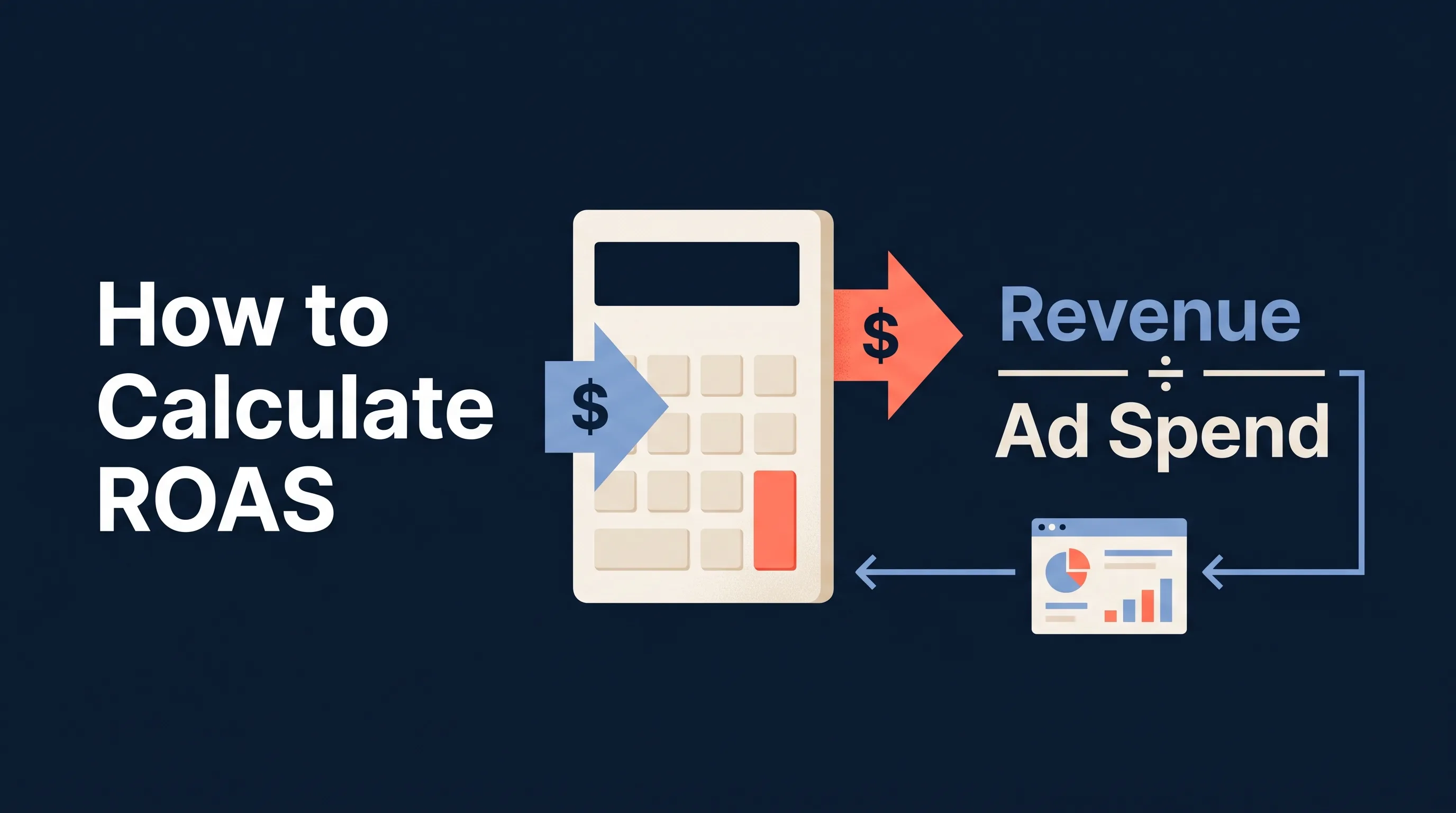
Campaign A looks twice as good in the ad platform and costs twice as much for each customer. Check both numbers before you move budget: enter a close rate in the Cost per lead tab of the calculator and it shows your cost per customer. The ROAS formula guide covers the revenue side of the same question.
Where Do I Find These Numbers?
Spend and lead counts come from the ad platform. Meta Ads Manager reports Amount spent, Results and Cost per result for each campaign. For a Leads campaign that uses an instant form, the results are leads. Our post on Facebook lead ads reporting has a screenshot of the Cost per result column.
Close rate and sale value come from your CRM or your books. The ad platform can’t see who became a customer unless you send that information back to it, which is what the Meta Conversions API is for.
LeadSync sends each new lead from Facebook, Instagram, TikTok, LinkedIn and Google Ads lead forms to your CRM, email or SMS as it arrives. Every lead then sits in the CRM where you record the sale, and that is the place to count the leads that became customers and work out your close rate.
Frequently Asked Questions
What is cost per lead?
Cost per lead (CPL) is what you spend on advertising to get one lead. The formula is ad spend divided by the number of leads. If you spend $1,000 and get 40 leads, your cost per lead is $25.
What is a good cost per lead?
A good cost per lead is one below the most you can afford to pay, which is average sale value × close rate × profit margin. With a $2,000 sale, a 10% close rate and a 40% margin, any cost per lead under $80 leaves a profit on the sale. Industry averages are only a rough check, because the same lead can be worth $80 to one business and $5 to another.
How do I calculate cost per lead for Facebook ads?
Divide the amount you spent on the campaign by the number of leads it produced. For a lead form campaign, Meta Ads Manager shows this figure in the Cost per result column. Check that the label under the number mentions leads. If you pay someone to run the ads, add their fee to the spend to get your full cost per lead.
Does the calculator work for Google Ads, LinkedIn and TikTok?
Yes. The formulas only use your own numbers (spend, leads, close rate, sale value and profit margin), so they work for any ad platform and for other paid channels such as directories or bought lead lists. Use the spend and lead count for one platform at a time if you want to compare them.
What is the difference between cost per lead and cost per customer?
Cost per lead divides your spend by everyone who became a lead. Cost per customer, also called customer acquisition cost (CAC), divides it by only the people who bought. Cost per customer = cost per lead ÷ close rate, so a $25 cost per lead with a 10% close rate is $250 per customer. Cost per acquisition (CPA) is used both ways: some people mean cost per customer, while ad platforms use it for the cost of any conversion they track, which for a lead campaign is a lead.