If you run Facebook lead ads, you have probably lived the manual routine: log in, download a CSV, paste it into a spreadsheet, repeat next week. Worse, Meta only stores lead data for 90 days, so leads you forget to download are gone for good (Meta Business Help Center). The good news is there are now three ways to get leads flowing into Google Sheets automatically: Meta’s free native integration (simple, one sheet per form), LeadSync (field mapping, notifications and multiple destinations per form), and DIY or manual options. This guide covers all three honestly, including where each one falls short.
Method 1: Meta’s Native Google Sheets Integration (Free)
Meta quietly rolled out a native Google Sheets connection for Instant Forms, so you can now send leads to a sheet without any third-party tool (Marketing Auditor, 2025; Tactic Lab, 2026). If all you need is raw leads landing in one spreadsheet, start here.
To set it up:
- Open Meta Business Suite and go to All tools > Instant Forms.
- Open the CRM Setup tab and choose Google Sheets.
- Click Sign in with Google and authorize the connection.
- Click New integration, then paste the URL of an existing Google Sheet or create a new one.
- Choose the worksheet and the lead form you want to connect.
- Optionally tick Sync existing leads to backfill that form’s past submissions into the sheet (a one-time import, limited to what Meta still stores).
- Click Send test lead, check the test row appears in your sheet, then click Validate change and Complete.
After the first test lead, Meta creates the header row for you and appends each new submission as a row: the contact fields from your form plus context like ad name, campaign, form ID, country and platform. There is also a toggle to automatically set up the integration for new forms you create later.
Where the Native Integration Stops
The native option is genuinely useful, but it is a pipe, not a platform:
- One destination. Leads go to a sheet and nowhere else. No email notification, no CRM, no fan-out.
- No field mapping or filters. Columns arrive as Meta defines them. You cannot rename, reorder, filter or transform anything.
- No alerts when it breaks. If your Google sign-in expires or a form edit severs the connection, leads simply stop appearing. Nobody emails you about it.
- Sheet-only workflow. If your process eventually needs a CRM, you will be rebuilding from scratch.
If you just want a running log of leads, use it. If leads feed a sales process, keep reading.
Method 2: LeadSync (Field Mapping and Multiple Destinations)
LeadSync also delivers each new lead to your Google Sheet in near real time, but adds the control the native option lacks: you choose exactly which form field lands in which column, you can add campaign and ad metadata columns, and one lead form can feed more than one destination at once. A common setup is Google Sheet for the record, email notification for the sales rep, CRM for the pipeline, all from the same form. It also manages every form across all your pages from one dashboard, which matters once you run more than a campaign or two.
Here is the full setup, which takes about five minutes.
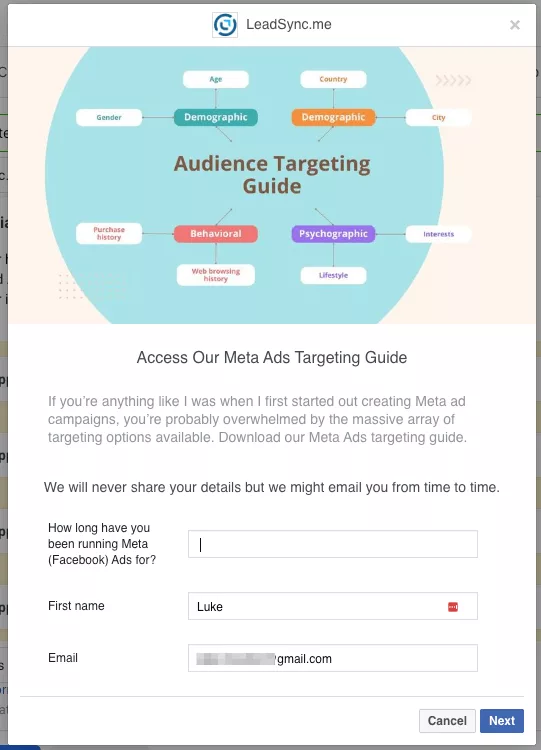
In this walkthrough we use a simple example Facebook lead form (also called a Meta Instant Form) that asks for first name, email address, and one open question: “How long have you been running Meta Ads for?” If you have not built your form or campaign yet, start with our guide to creating a Facebook lead ad campaign.
Step 1: Create Your Google Sheet
- Log in to your Google account and create a new spreadsheet in Google Sheets.
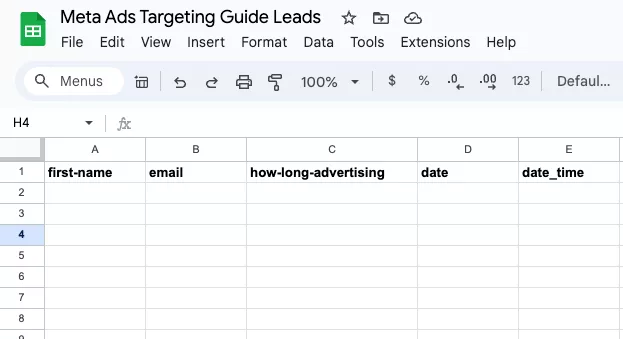
- Add column headers in row 1 that match the fields in your Facebook lead form. Each column will hold one field from the form.
- Add a date column and a date and time column so you can record when each lead arrives. LeadSync automatically adds Submission date and Submission date and time fields to the mapping for every lead, so you do not need to add a date question to your Facebook form. Just create matching columns in your sheet to map them to.
Step 2: Connect Google Sheets to LeadSync
Create a LeadSync account if you do not have one (7-day free trial, no credit card) and add your Meta account.
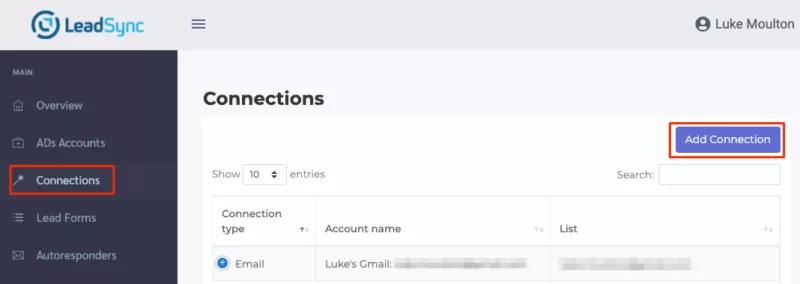
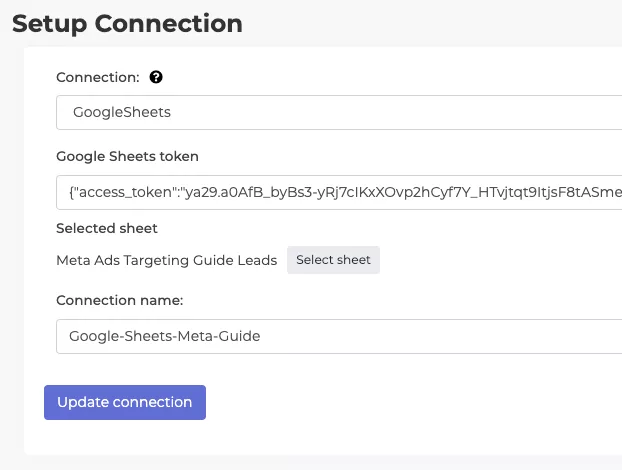
Click Connections, then the Add Connection button.
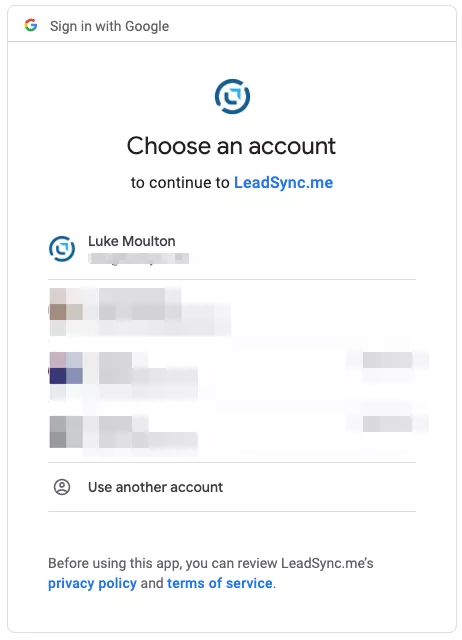
Click the Connection drop-down and select Google Sheets. Sign in with your Google account when prompted. You may be asked to grant access to Google Drive so LeadSync can list your spreadsheets.
Click the Select Sheet button, choose the spreadsheet you created in Step 1, then name your connection and click Update connection.
Step 3: Pair Your Facebook Lead Form
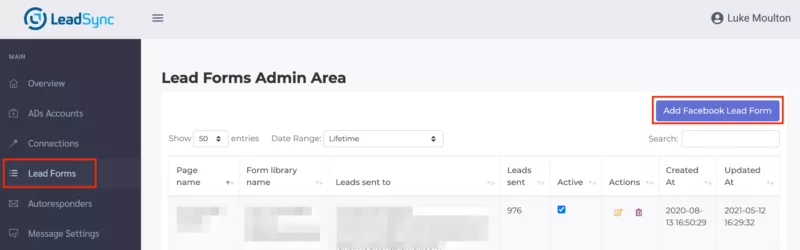
Back in the main LeadSync view, go to the Lead Forms section and click Add Facebook Lead Form.
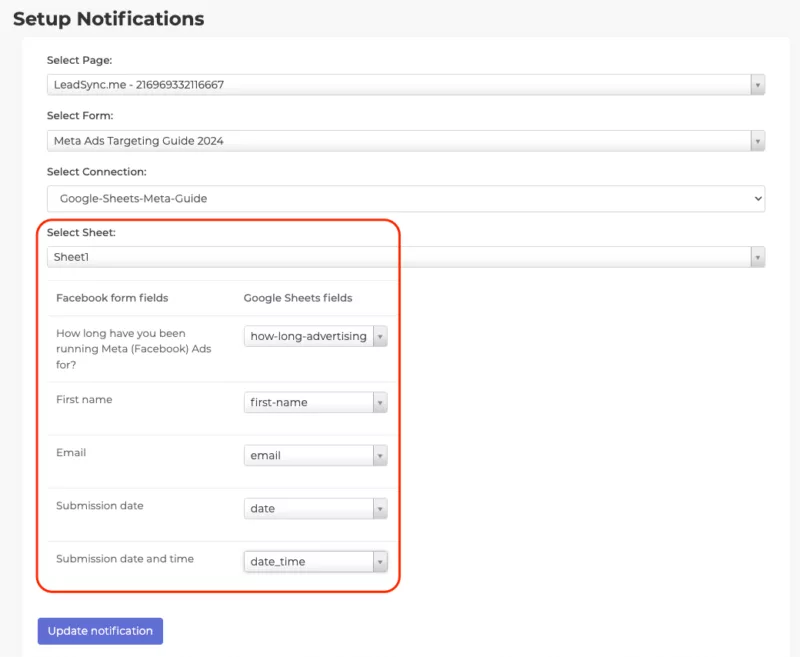
From the drop-downs, select your Facebook Page and the lead form used in your ad, then select the Google Sheets connection you created in Step 2. Make sure you select the sheet here too.
Now map each Facebook form field to the matching Google Sheets column. This is where you can also add optional tracking fields like Platform, Campaign Name, AdSet Name and Ad Name, handy when several campaigns feed the same sheet and you want to know which ad produced each lead. When the mapping looks right, click Update.
Step 4: Send a Test Lead
Submit a test lead using Meta’s testing tool or LeadSync’s built-in tester, then check your sheet for a new row with every field in the right column. Here is exactly how to test your Facebook lead form connection. Testing now beats debugging later, especially before you scale spend.
Method 3: DIY Automation and Manual Options
Two other routes exist, and both are legitimate in the right situation.
Automation platforms like Zapier, Make and n8n can move Facebook leads into Google Sheets as one step in a broader workflow. They are the right call when Sheets is just one node in a complex multi-app automation you already run. The trade-offs are per-task pricing that grows with lead volume and more moving parts to maintain. We have written a full LeadSync vs Zapier comparison if you are weighing the two.
Manual CSV export from Meta still works for one-off pulls; here is how to download your leads from Facebook. Just remember the 90-day window.
Which Method Is Best for Sending Facebook Leads to Google Sheets?
For most advertisers: use Meta’s native integration if you only need leads in a sheet, and LeadSync as soon as you need field mapping, notifications, or the same lead in more than one place. Here is the honest comparison:
| Meta native | LeadSync | Zapier-style tools | Manual CSV | |
|---|---|---|---|---|
| Cost | Free | From $24/mo (7-day free trial) | Free tier, then per-task pricing | Free |
| Real-time delivery | Yes | Yes, typically within a minute or two | Yes, speed varies by plan | No |
| Backfills past leads | Yes, one-time “Sync existing leads” | No, new leads from connection time | No, typically new leads only | Yes, last 90 days |
| Field mapping and custom columns | No | Yes | Yes | Edit by hand |
| Multiple destinations per form | No, one sheet only | Yes: sheet plus email, CRM and more | Yes, with extra tasks per destination | No |
| Email notifications per lead | No | Yes | Yes, as an extra step | No |
| Manage many forms and pages | Per-form setup (toggle for new forms) | Yes, one dashboard | One workflow per form, typically | Manual every time |
What Are the Limits and Gotchas?
A few things trip people up regardless of method:
- Meta’s 90-day lead retention. Lead data is only downloadable for 90 days after submission, then it is permanently deleted (Meta Business Help Center). This is the single strongest argument for real-time sync over periodic export: a synced lead is safe in your sheet forever.
- Form field changes. Editing a form or launching a new variation can silently break a connection. Meta’s native integration can sever entirely. LeadSync can automatically map new variations of a form you have already connected, but the safe habit is the same everywhere: after any form change, send a test lead and check the mapping.
- Google Sheets size limits. A spreadsheet caps out at 10 million cells (Google Drive Help). With a 10-column sheet that is roughly a million rows, so high-volume advertisers should archive to a fresh sheet yearly.
- Plan lead volumes. LeadSync plans include 1,500 leads per month on Business, 50,000 on Marketer, and unlimited on Agency (pricing). If you are pushing serious volume, pick the plan that actually fits it.
One quick disambiguation before we wrap up. If you are after ad performance data in Sheets (spend, CPL, results by campaign) rather than the leads themselves, that is a reporting export, a different job handled by reporting connectors rather than any of the methods above. This guide is about the lead records your forms capture.
Next Steps
Once your leads are landing in Google Sheets, you can turn that sheet into a simple CRM, or go a step further and convert it into a mobile-friendly app with our guide to turning a Google Sheet into an AppSheet app. Running TikTok ads too? The same approach works for sending TikTok leads to Google Sheets.
Frequently Asked Questions
Can Facebook lead ads send leads to Google Sheets without Zapier?
Yes. Meta now has a free native Google Sheets integration for Instant Forms (found under CRM Setup in Meta Business Suite), and tools like LeadSync sync leads to a sheet while also adding field mapping, email notifications and CRM destinations. You no longer need a per-task automation platform for this job.
Does Meta’s native Google Sheets integration import past leads?
Yes. During setup you can tick “Sync existing leads” to backfill that form’s past submissions into the sheet once. Remember Meta only stores lead data for 90 days, so anything older is gone regardless of which method you use.
Is it possible to send leads to multiple Google Sheets?
Yes. In LeadSync you can create a separate Google Sheets connection for each lead form, sending each form’s leads to its own sheet. You can also pair one form with more than one connection, for example a Google Sheet plus an email notification.
Can I customize the data sent to Google Sheets?
Yes. LeadSync lets you map each Facebook lead form field to the column you choose, and you can add optional tracking fields like Platform, Campaign Name, AdSet Name and Ad Name. Meta’s native integration writes a fixed set of columns with no mapping control.
How real-time is the lead sync with Google Sheets?
LeadSync typically syncs leads almost immediately after they are submitted on Facebook. It may take a minute or two for a new row to show up in your Google Sheet.
What if I update the fields in my Facebook lead ad?
Check your field mapping after any form change. When Meta serves a new variation of a form you have already connected, LeadSync can automatically map it based on your existing connection. Even so, send a test lead after editing a form to confirm every field lands in the right column.
Is there a limit to the number of leads I can sync to Google Sheets?
LeadSync plans include a monthly lead volume: 1,500 leads per month on Business, 50,000 on Marketer, and unlimited on Agency. Google Sheets itself caps a spreadsheet at 10 million cells, which is worth knowing if you run very high volumes into one sheet for years.
How secure is the data transfer to Google Sheets?
LeadSync connects to your Google account via OAuth and transfers lead data over HTTPS. You should also review your Google Sheet’s sharing settings, since anyone with edit access to the sheet can see your lead data.
How do I troubleshoot if leads are not appearing in Google Sheets?
Check your LeadSync connection settings first: confirm the correct sheet is selected and the form is paired with your Google Sheets connection. Submit a test lead and watch for a new row. If it still fails, see our troubleshooting FAQ at support.leadsync.me/troubleshooting/not-receiving-leads/.
Related Integration Guides
Running lead forms on other platforms too? The same Google Sheets setup works everywhere: