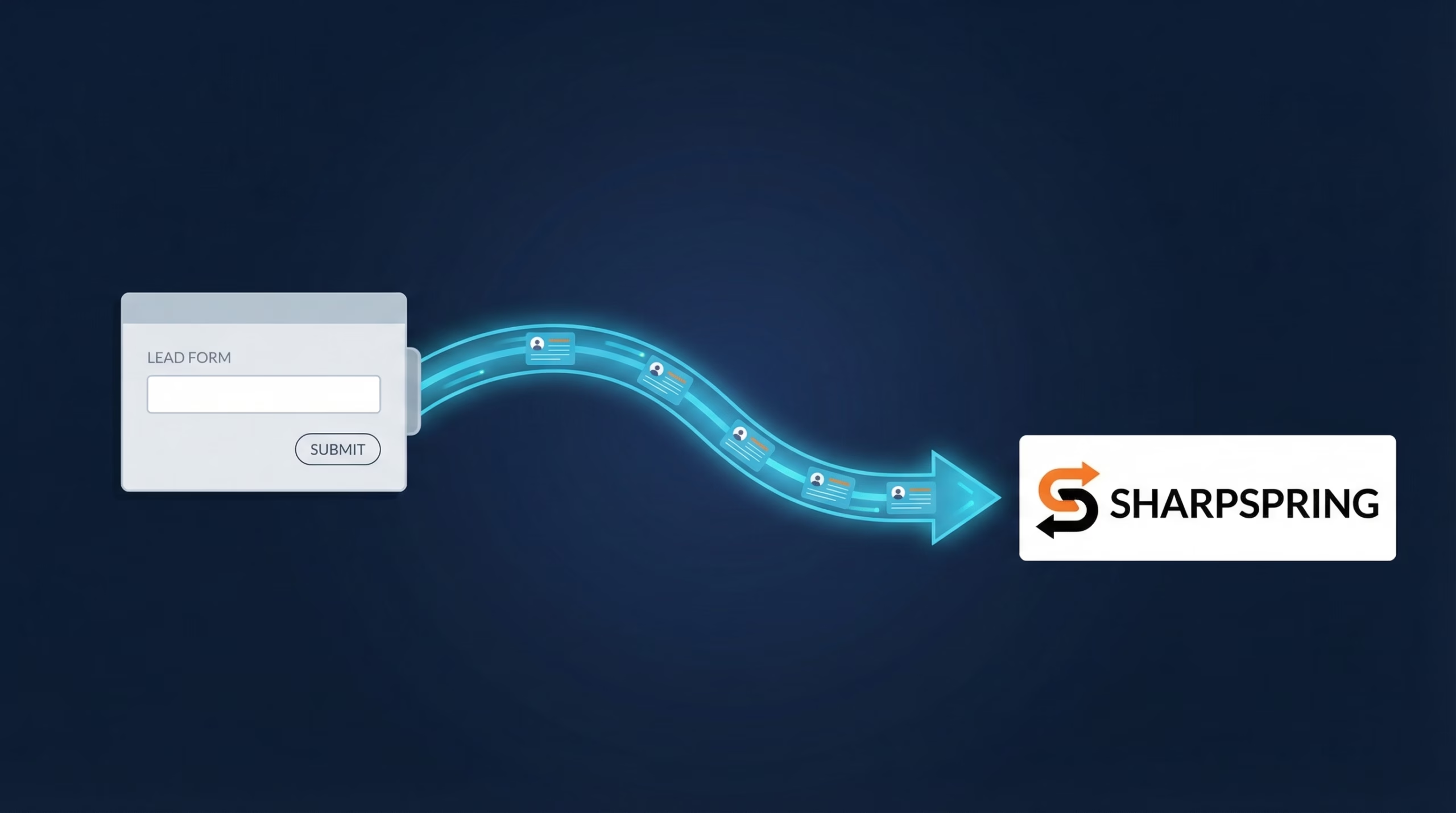
Google Ads Lead Form Extensions generate thousands of qualified prospects every month, but manual data entry and delays cost you conversions. SharpSpring is a powerful CRM for service-based businesses, yet lead data sitting in Google’s platform does nothing for your sales team. LeadSync bridges this gap by automatically routing Google Ads leads directly into SharpSpring – turning interested prospects into qualified contacts in 1-2 minutes, without manual work or custom code.
Quick Start: Google Ads Leads to SharpSpring in 5 Steps
- Connect LeadSync to your Google Ads account and select your lead form extension via OAuth
- Grab your SharpSpring API credentials (Account ID + Secret Key) from your account settings
- Add a SharpSpring connection in LeadSync and select your target active list
- Map your Google form fields to SharpSpring contact properties and custom fields
- Test a lead submission – it syncs to SharpSpring in 1-2 minutes
Why Sync Google Ads Leads to SharpSpring?
Automating your Google Ads-to-SharpSpring workflow delivers immediate business value. Here’s what you gain:
- Instant Lead Capture: Each Google lead form submission is automatically created and added to your active SharpSpring list within 1-2 minutes, no manual entry, no delays, no spreadsheets.
- Smart Lead Descriptions: Lead descriptions are auto-populated with the form name and submission timestamp, giving your team instant context on every prospect.
- Custom Field Support: Map any Google form field to SharpSpring standard contact properties or custom fields. Handle unlimited custom data without extra setup.
- Multi-Channel Lead Capture: Google Ads lead forms are just one source. The same LeadSync workflow accepts leads from Google, Facebook, LinkedIn Lead Gen Forms, and TikTok, all routing to the same SharpSpring list.
- No Monthly Fees, No Zapier Needed: LeadSync costs a flat rate and includes all integrations. Start with a 7-day free trial, no credit card required, cancel anytime.
Step-by-Step: Connect Google Ads Leads to SharpSpring
Step 1: Connect Your Google Ads Account to LeadSync
Log in to your LeadSync account and navigate to Ad Accounts > Google from the left menu. Click the Add Google Account button. You’ll be redirected to Google’s sign-in page. Authenticate with the Google account that has access to your Google Ads campaigns, then grant LeadSync permission to access your Google Ads data. Your account will appear in the connected accounts list once authorization is complete.
Step 2: Get Your SharpSpring API Credentials
Log in to your SharpSpring account and navigate to Settings > SharpSpring API > API Settings. You’ll see two fields:
- Account ID – A unique identifier for your SharpSpring account
- Secret Key – Your private API key (keep this secure and never share it)
Copy both values and save them somewhere safe – you’ll need them in the next step.
Step 3: Add a SharpSpring Connection in LeadSync
In LeadSync, go to Connections from the left sidebar. Click the Add Connection button and select SharpSpring from the list of available platforms. LeadSync will prompt you for your SharpSpring credentials. Paste your Account ID and Secret Key into the corresponding fields. Give your connection a descriptive name like “Google Leads” to keep track of it if you have multiple SharpSpring lists. Click Update Connection to verify the credentials. If the connection succeeds, you’ll see a confirmation message.
Step 4: Select Your Target SharpSpring List
After verifying your credentials, LeadSync will fetch all your SharpSpring active lists. Select the list where you want Google leads to be added. This is typically a list like “Google Leads” or “Lead Form Submissions” – create a new list in SharpSpring first if needed, then refresh the dropdown in LeadSync to see it.
Step 5: Set Up Your Google Lead Form Connection
In LeadSync, go to Lead Forms from the left menu. Click Add Google Lead Form. From the dropdown, select the Ad Account that contains your lead form extension (you must have already connected your Google Ads account in Step 1). Next, select your Lead Form Extension from the list of available forms in that ad account. Finally, select the SharpSpring Connection you created in Step 3.
Step 6: Map Your Fields
The field mapping step is where the magic happens. LeadSync shows your Google form fields on the left and your SharpSpring contact properties on the right. Match them to ensure data flows correctly:
- Google “First Name” → SharpSpring “firstName”
- Google “Last Name” → SharpSpring “lastName”
- Google “Email” → SharpSpring “email” (required)
- Google “Phone” → SharpSpring “phone”
- Any custom fields → Custom properties (if you created them in SharpSpring)
Fields that don’t have a match in SharpSpring can be stored in the lead description or ignored. LeadSync will guide you through any unmapped fields. Click Update Notification to save your configuration.
Step 7: Test with a Lead
Before going live at scale, submit a test lead through your Google Ads campaign. Give LeadSync 1-2 minutes to process the lead, then log in to SharpSpring and check your active list. You should see the test contact with all fields correctly populated. Verify the lead description includes the form name and timestamp. If the lead doesn’t appear, check that the email field is mapped correctly and that your SharpSpring API credentials are valid.
Customizing Your SharpSpring Integration
Once your Google Ads-to-SharpSpring sync is running, you can fine-tune it to match your sales process:
- Lead Scoring & Segmentation: Use SharpSpring automation rules to assign leads to sales reps or move high-value prospects to a VIP list based on form data.
- Conditional Routing: Set up LeadSync rules to send leads to different SharpSpring lists based on form field values (e.g., “Route service requests to the Service team list”).
- Duplicate Prevention: LeadSync checks for existing contacts in SharpSpring by email before creating a new record, reducing data bloat and keeping your list clean.
- Sync History & Logs: Review all synced leads in LeadSync’s dashboard to confirm delivery and troubleshoot any mapping issues.
Go Beyond SharpSpring: Multi-Channel Lead Routing
Google Ads leads are just the beginning. LeadSync lets you build a unified lead-capture workflow across multiple channels, all flowing to SharpSpring or routing to different destinations based on your business rules:
- Email Notifications: Get instant email alerts when high-priority Google leads submit your form.
- Slack Integration: Post Google lead summaries to Slack so your team sees them in real-time without leaving chat.
- Google Sheets: Automatically log leads to a Google Sheet for quick team review and analytics.
- SMS Notifications: Text your sales team when a lead arrives, ensuring faster follow-up.
Combine these with SharpSpring sync to build a truly automated lead management engine that works across all your marketing channels.
Related Integration Guides
Looking for a different destination for your Google Ads leads? These integration guides walk you through setup step by step:
- How to Send Google Ads Leads to Ontraport
- How to Send Google Ads Leads to HubSpot
- How to Send Google Ads Leads to Pipedrive
- How to Send Google Ads Leads to Zoho CRM
- How to Send Google Ads Leads to Keap
Frequently Asked Questions
How long does it take for a Google Ads lead to appear in SharpSpring?
LeadSync syncs most Google Ads leads within 1-2 minutes of form submission. This is slightly longer than Facebook leads due to the nature of how Google Ads processes form data, but it’s still fast enough to enable real-time sales workflows.
What happens if a lead already exists in SharpSpring?
LeadSync checks for existing contacts by email address. If a match is found, the existing contact is updated with any new form data rather than creating a duplicate. This keeps your SharpSpring list clean and prevents data bloat.
Can I send Google leads to multiple SharpSpring lists?
Yes. Set up multiple lead form connections in LeadSync – each with different SharpSpring lists as destinations. Use conditional routing rules to decide which list each lead goes to based on form responses, campaign, or other criteria.
Do I need to know how to code?
No code required. LeadSync is designed for non-technical users. The entire setup – from connecting Google Ads to mapping fields – happens through a simple, intuitive interface.
What if a Google form field doesn’t match any SharpSpring property?
LeadSync lets you store unmapped fields in the lead description, or you can create a custom field in SharpSpring first and map to it. If neither option works, the field is simply not synced.
Can I sync leads from other ad platforms (Facebook, LinkedIn, TikTok)?
Absolutely. LeadSync supports Google, Facebook, LinkedIn Lead Gen, and TikTok lead forms. You can send all of them to SharpSpring using the same workflow, or route them to different destinations based on the source channel.
What if my Google lead form isn’t showing up in LeadSync?
Your Google lead form must be part of an active or paused campaign in order to appear in LeadSync. If you’ve just created it, it may take a few minutes for it to sync. Also, make sure your Google account has access to the ad account containing the campaign.
What if the sync fails for a lead?
LeadSync logs all synced leads and flags any errors in the dashboard. Common failures include incorrect API credentials, missing the required email field mapping, or a deleted SharpSpring list. The error message tells you exactly what to fix.
Is there a limit to how many Google Ads leads I can sync?
No artificial limits. LeadSync scales with your business. Whether you’re syncing 10 leads a day or 1,000, the cost stays the same. Your only limit is your SharpSpring plan’s contact capacity.
Can I undo a sync or delete leads from SharpSpring through LeadSync?
LeadSync syncs leads into SharpSpring but doesn’t manage deletion. To remove a lead, log in to SharpSpring directly and delete it from your active list. LeadSync’s job is to move data forward, not backward.
Ready to automate your Google Ads-to-SharpSpring lead flow? Start your free 7-day trial today, no credit card required, and full access to all integrations. Your sales team will thank you for the instant lead delivery.