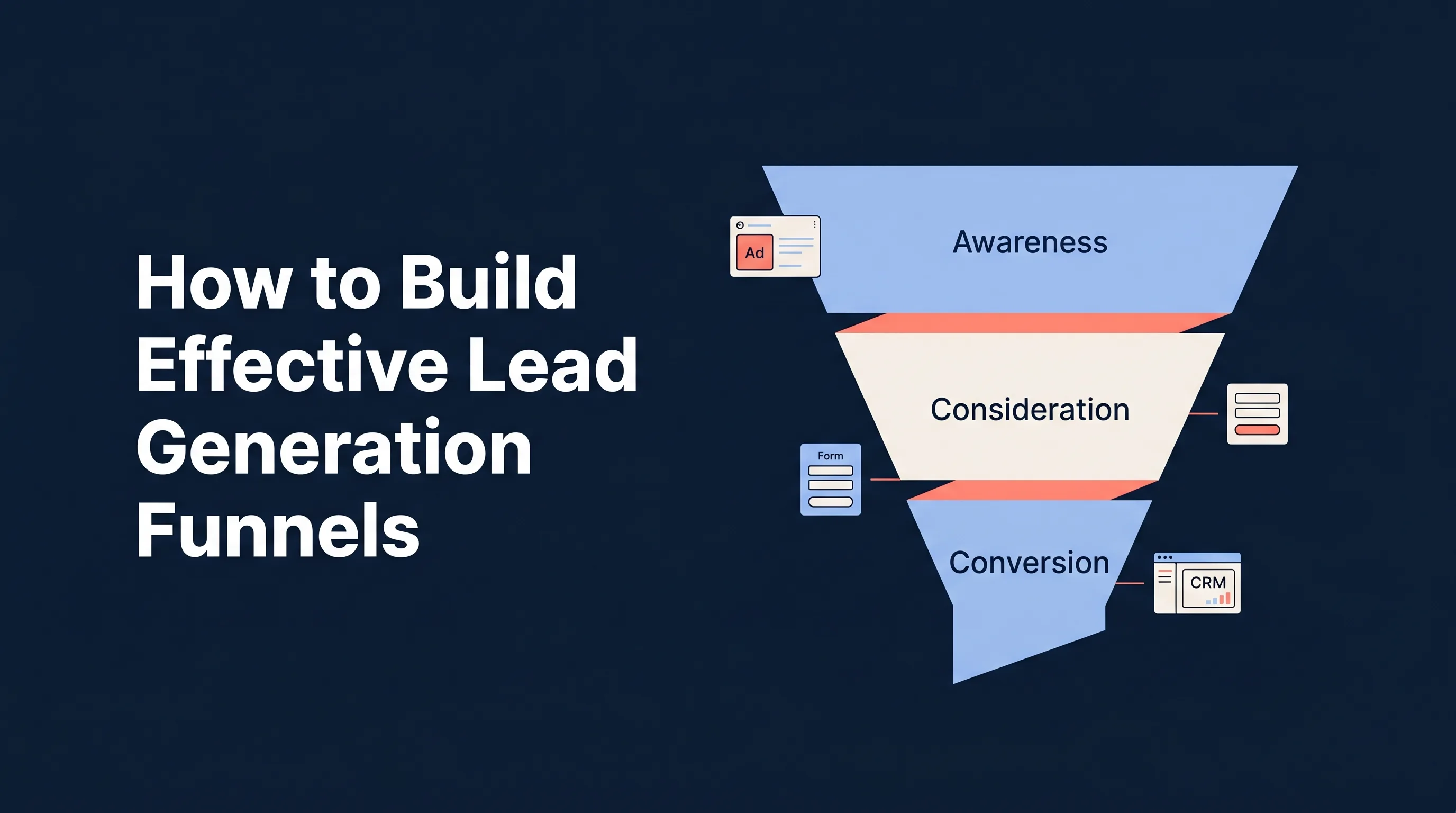
A lead generation funnel isn’t a metaphor. It’s a concrete sequence of steps – awareness, consideration, conversion – that turns cold traffic into qualified leads and qualified leads into customers. The difference between a funnel that works and one that doesn’t is almost always in the details: how tight the audience is, how relevant the offer is, and how fast a new lead reaches someone who can sell to them.
This guide walks through the three stages, the six steps to build your own funnel, a specific Meta Lead Ads funnel blueprint that targets the exact channel most B2B and local businesses run paid spend on today, and the tooling that ties it together.
Key Takeaways
- A lead generation funnel has three core stages – awareness, consideration, and conversion: and the job of each is different. Most underperforming funnels fail because they try to convert in the awareness stage.
- B2C funnels are short and emotional. B2B funnels are longer, involve 3–6 decision-makers, and rely on case studies, whitepapers, and nurture sequences to build consensus.
- For paid lead gen in 2026, Meta Lead Ads with an Instant Form consistently outperform sending traffic to a landing page – typical conversion rate 12–14% vs 2–3%.
- Speed to follow-up matters more than almost anything else in the funnel. Responding within five minutes beats responding within 30 by 21× for contact rate. If your leads sit in a CSV, your funnel is leaking at the bottom.
- Tie the funnel back to your ad platform. Meta’s Conversions API reports downstream conversions from your CRM back to Meta so the algorithm optimises toward customers, not form fills.
What a Lead Generation Funnel Actually Does
A funnel is a filter. At the top, you have a large group of people who don’t know you exist. At the bottom, you have a much smaller group of people who’ve bought from you. Every stage in between is about narrowing the audience down to the subset worth spending sales time on.
The value of thinking in funnel stages is that each stage has a different job, a different metric, and a different kind of content. Mixing them up – running a “book a demo” ad to a cold audience, for example – is why so many campaigns quietly burn budget without producing pipeline.
The Three Core Stages
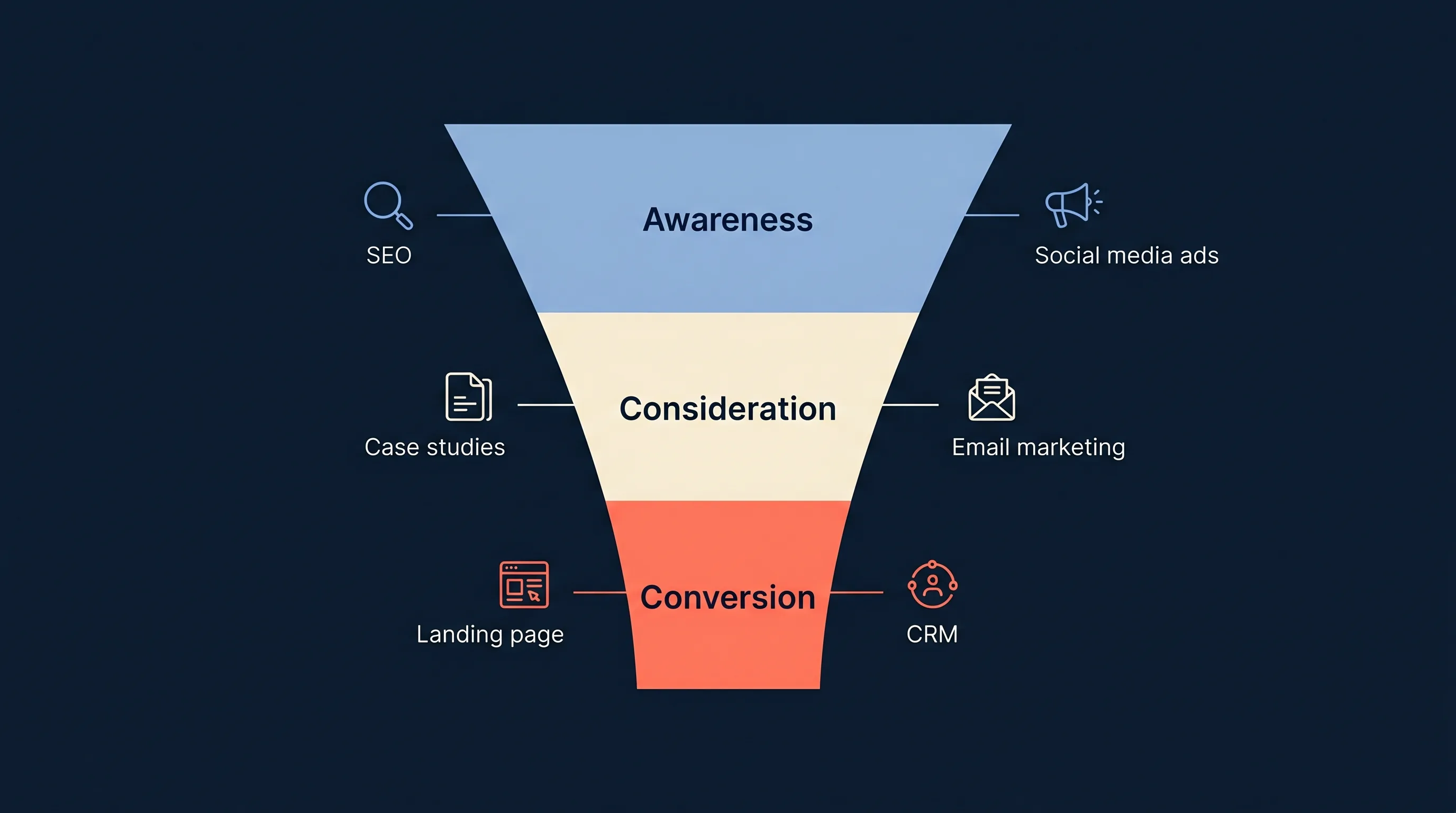
Awareness
The job is to reach people who have the problem you solve, even if they don’t know your brand yet. Channels that work at this stage: SEO for informational queries, organic social content, paid social awareness campaigns, YouTube, podcast sponsorships, PR.
Metric: reach, CPM, video view rate, engaged sessions. What doesn’t belong here: pricing pages, demo requests, product feature copy.
Consideration
The job is to move people from “I have this problem” to “this might be the tool that fixes it.” This is where most content marketing earns its keep – comparison pages, case studies, how-to guides, webinar replays, free tools and calculators, email nurture sequences.
Metric: email opt-ins, lead magnet downloads, pageviews per session, return visits. What doesn’t belong here: generic top-of-funnel content repeated three times, or a demo CTA that assumes intent the visitor hasn’t shown yet.
Conversion
The job is to remove friction at the moment someone is ready to raise their hand. Landing pages with a single CTA, product trials, demo requests, pricing transparency, frictionless checkout, fast follow-up.
Metric: form completion rate, lead-to-demo rate, demo-to-customer rate, CPL, CAC. What doesn’t belong here: multi-step forms asking for information you don’t need, delayed follow-up, hand-off gaps between marketing and sales.
B2B vs B2C: What Actually Differs
B2C funnels are usually short and emotional. Someone sees a product ad, clicks, buys in the same session or after one remarketing touch. The lever that matters most is creative. The trust signals that matter most are reviews, social proof, and return policy.
B2B funnels are longer and involve a buying committee, typically 3–6 people at the buyer company, each with a different concern. The lever that matters most is content depth (whitepapers, calculators, case studies) and sales-assist speed (demos, custom proposals). The trust signals that matter most are peer references, security/compliance documentation, and the buyer’s ability to build internal consensus around you.
Both funnels benefit from the same underlying structure. What changes is how many touches it takes, what the content at each stage looks like, and how much sales involvement is required.
The Six Steps to Build Your Funnel
1. Define the target audience
Specific beats broad. “Small business owners” is not a target audience. “Independent law firms with 2–10 lawyers doing personal injury work in the US” is. Build one or two focused buyer personas – role, company size, problem they’re trying to solve, what they’re using now, what they’d need to see to switch, and write every piece of downstream content for those personas specifically.
2. Identify the pain point you solve
The best-performing lead magnets and ads solve one specific, named problem. Not “grow your business.” Yes “recover 30% of abandoned cart traffic without changing your checkout.” Surveys, sales call recordings, support tickets, and G2/Capterra reviews of your competitors are the fastest ways to find the actual words customers use to describe the pain.
3. Create a lead magnet worth the email
A lead magnet is a trade: you give something genuinely useful, they give you their contact details. Anything that sounds like “7 tips for…” is usually too generic to work.
Lead magnets that consistently convert:
- Calculators and assessments: ROI calculators, readiness scorecards, cost-per-lead benchmarks.
- Templates and checklists that save the reader an hour.
- Industry benchmark reports with data they can’t get elsewhere.
- Teardown-style audits (“I’ll review your landing page and send you a Loom”).
- Short, specific guides (5–10 pages, one topic, bring-a-result).
The test: would someone pay $50 for this if you charged? If not, reshape it until they would.
4. Design an optimised landing page, or skip it
A landing page is a single-purpose page with one goal: the form submission. Keep the hero copy tight, mirror the ad that brought the visitor in, cut every link that isn’t the CTA, and show one piece of social proof near the form.
The alternative – particularly for paid social – is to skip the landing page entirely and use a native form like Meta’s Instant Form or LinkedIn’s Lead Gen Form. Conversion rates run three to five times higher because the prospect never leaves the platform and the form is pre-filled. More on that below.
5. Set up the nurture sequence
Most leads aren’t ready to buy the day they download your lead magnet. A nurture sequence keeps you in their inbox for the next few weeks with content that earns attention and eventually makes the case for a demo or purchase.
A workable starter sequence:
- Day 0: Deliver the lead magnet, thank them, tell them what to expect next.
- Day 2: Share a case study or customer story relevant to their use case.
- Day 5: One teaching email – a playbook, framework, or short how-to.
- Day 9: The sales pitch. A specific offer – demo, trial, pricing call – with a clear CTA.
- Day 14: A last-chance follow-up with social proof and a soft deadline.
After that, move them to a weekly or monthly list. Don’t let people go completely cold.
6. Drive traffic to the funnel
The three reliable sources in 2026:
- SEO for informational queries your buyers are actually searching. Slow but compounds.
- Paid social: Meta Lead Ads for local/B2C and high-velocity B2B; LinkedIn Lead Gen Forms for enterprise/B2B.
- Partnerships and earned channels: podcast guesting, affiliate programs, integration marketplaces, cross-promotion.
Most funnels over-index on one channel. A sturdier funnel runs at least two of the three at any time.
Building a Meta Lead Ads Funnel
This is the highest-leverage funnel most businesses can build in 2026 because Meta’s Instant Forms collapse the “traffic to landing page” step entirely, conversion rates are several times higher than web landing pages, and the whole system can run end-to-end without a website.
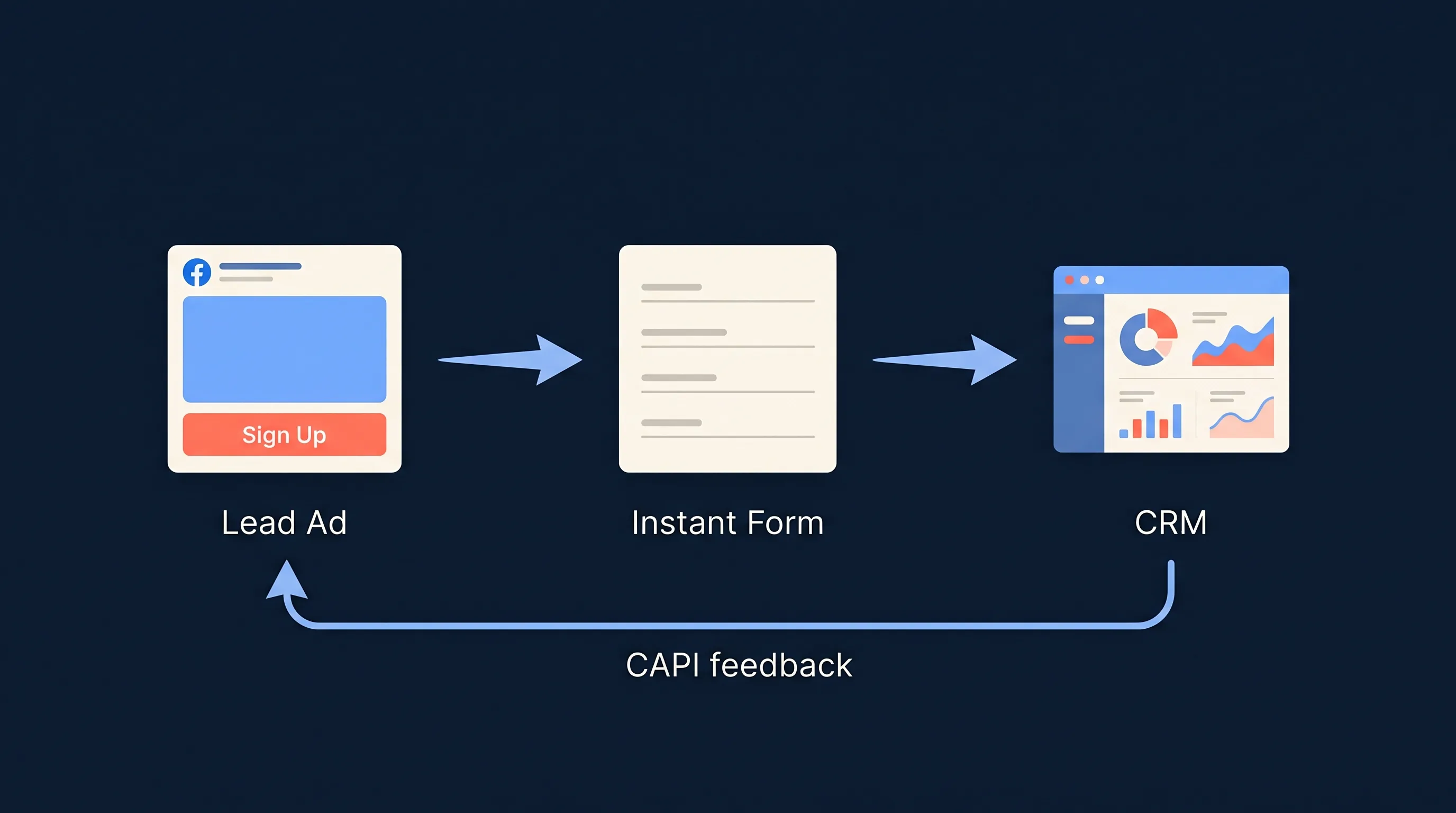
The five components:
- Cold audience targeting: Advantage+ Audiences or interest-based, large enough for Meta to optimise delivery (usually 1M+).
- Lead Ad with Instant Form: a short form (4–6 fields) with a clear offer in the ad creative and headline. Pre-filled fields cut friction to almost zero.
- Instant handoff to CRM: the lead appears inside Meta Ads Manager immediately, but by default it sits there until you download a CSV. A sync tool pushes the lead into your CRM in under a minute. (LeadSync does this for 50+ destinations.)
- Nurture sequence in the CRM: the day-0 through day-14 flow from the section above runs as soon as the lead lands.
- Conversions API feedback loop: when a lead becomes a qualified opportunity or a customer, the CRM fires that event back to Meta via CAPI. Meta’s algorithm stops optimising toward form fills and starts optimising toward actual buyers. This is the step that separates ad accounts that spend efficiently from ones that don’t.
A workable starting budget is $50–$100/day for at least two weeks. Below that, Meta’s learning phase struggles to exit and you won’t have enough data to judge the creative or audience. Target cost per lead varies dramatically by industry – $5–$15 for most local services, $30–$80 for B2B, $100+ for enterprise.
Optimising the Funnel Over Time
Track what actually matters
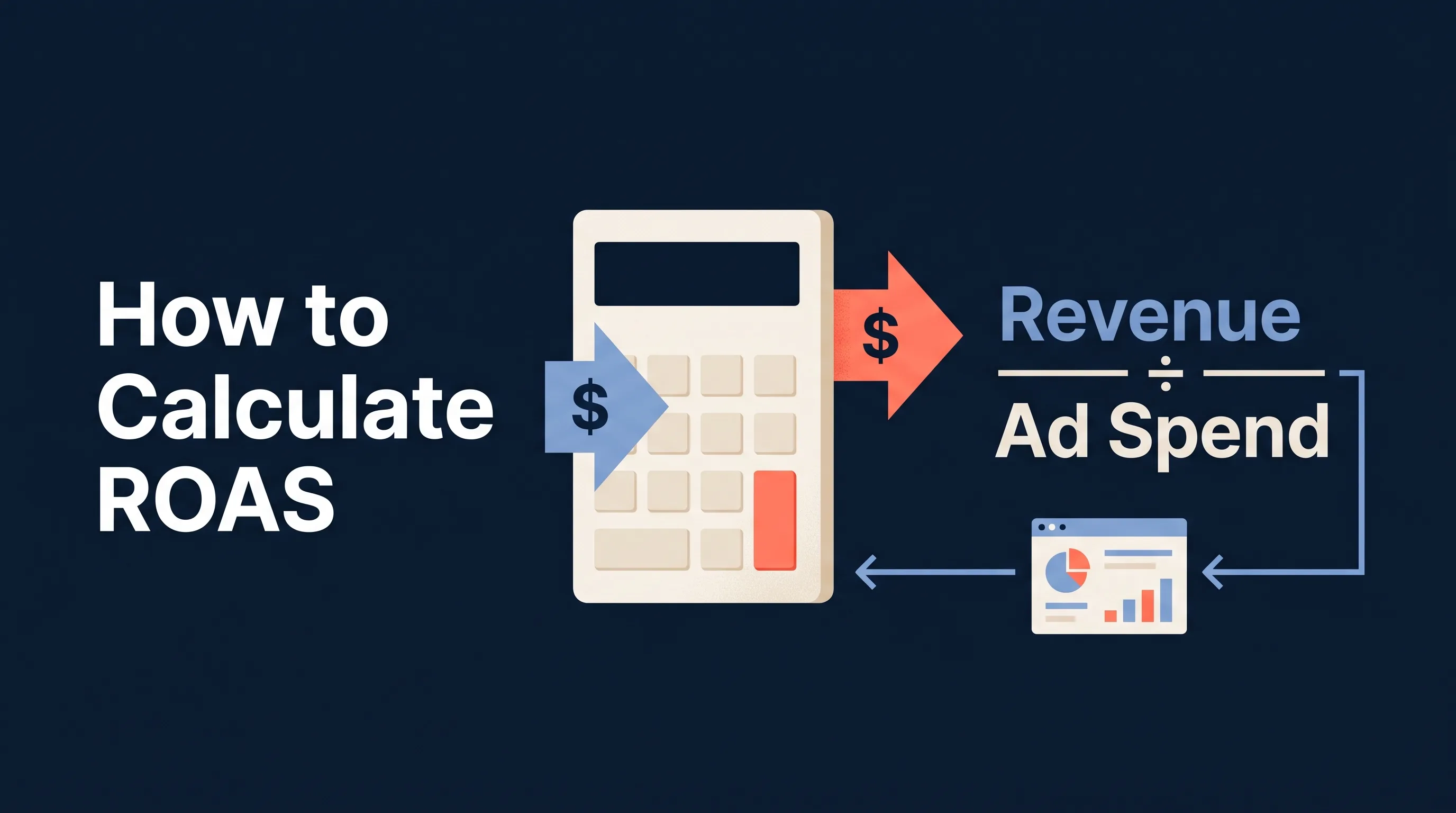
Not every metric in Google Analytics is worth tracking. The ones that move the business: CPL by channel, form completion rate, MQL→SQL conversion rate, SQL→customer conversion rate, ROAS, and payback period.
Set those up inside a single dashboard – Looker Studio, Metabase, or your CRM’s reporting, and look at them weekly. Leading metrics (CPL, fill rate) catch problems in days. Lagging metrics (CAC, LTV, payback) catch them in months.
Qualify leads before sales gets them
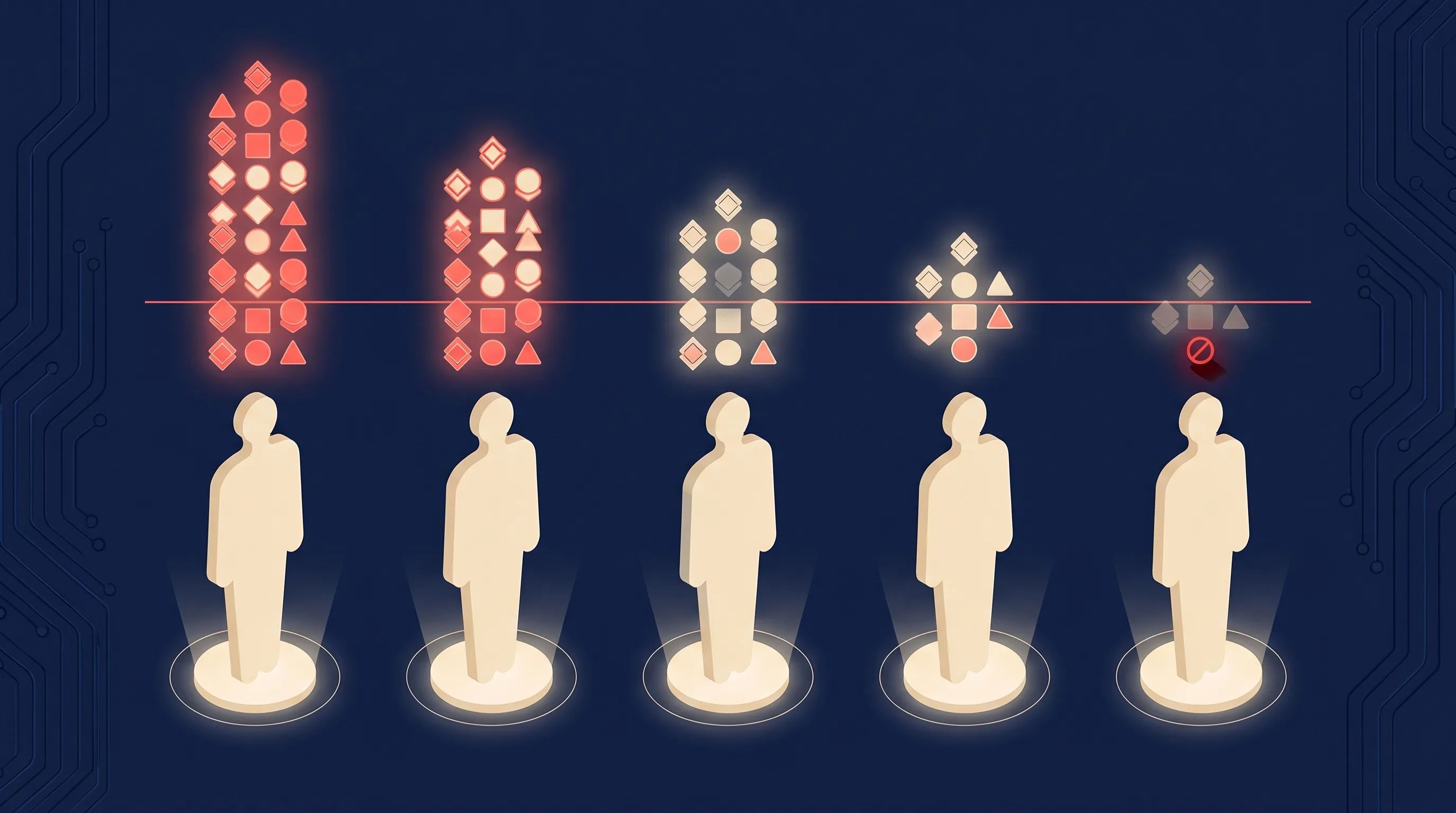
Not every lead should go to sales. If 80% of your form fills are junk, your sales team will learn to ignore marketing. Apply a qualification layer – a simple BANT or MEDDIC scorecard, an enrichment tool like Clearbit, or automated lead scoring based on behaviour, so sales only sees the leads with a real shot at closing.
A/B test the highest-leverage elements
Most A/B tests are won or lost on:
- The offer (what you’re promising). Biggest lever by far.
- The headline of the ad and the form.
- The creative: image vs video, UGC vs polished.
- The CTA button copy on forms and landing pages.
Don’t test button colours. The upside is too small to detect.
Close the speed-to-lead gap
This is the single highest-leverage optimisation in most funnels and almost no one does it well. A Harvard Business Review study found contact rates drop by 10× between five minutes and 30 minutes after a lead submits. If your average time from form submit to first human contact is over five minutes, fix that before anything else.
Aligning Sales and Marketing
Two teams, one pipeline. The gaps that consistently hurt funnels:
- Different definitions of a “qualified lead.” Marketing passes 100 leads; sales says five were qualified. Get both teams to agree on written criteria and revisit quarterly.
- No shared dashboard. If marketing is looking at leads per week and sales is looking at closed revenue, you’ll disagree about whether the funnel is working. Build one scorecard both teams see.
- Broken handoff. Is a new MQL auto-assigned to an AE within seconds? If not, build that pipeline. Slack channels with CRM webhooks work well for small teams; round-robin rules in the CRM work for bigger ones.
- No feedback loop. Sales has to tell marketing which leads actually closed, and why. That data retrains ad targeting, content strategy, and lead scoring.
The Tech Stack That Actually Matters
Three categories of tool, in priority order:
- A CRM: a single place where leads land, get assigned, get nurtured, and get marked won/lost. HubSpot, Pipedrive, Salesforce, Close, or Zoho depending on size and budget.
- Marketing automation: email sequencing, segmentation, and behavioural triggers. Often bundled with the CRM (HubSpot, ActiveCampaign) or standalone (Customer.io, Mailchimp, Kit).
- A sync layer: the piece that moves leads out of ad platforms and into the CRM the moment they submit. Without this, all the speed-to-lead work above is impossible.
Everything else – attribution tools, intent data providers, ABM platforms, chatbots – is optional until those three are running cleanly.
Common Funnel Problems and How to Fix Them
Low conversion rate on the landing page
Usually a message-match problem. Ad promises X, page talks about Y. Rewrite the hero to mirror the ad creative word-for-word, remove anything that isn’t the CTA, add one testimonial above the fold.
High drop-off on the form
Either the form is too long or you’re asking for information at the wrong time. Cut to the fewest fields that let sales follow up (name, email, company, role is usually plenty). Move qualifying questions after the submission, on the thank-you page or in a follow-up email.
Leads go cold between marketing and sales
Almost always a speed problem. If sales doesn’t see the lead for an hour, the lead has gone back to their day. Wire every form submission into a Slack alert (or equivalent) so a human sees it in under a minute, and give sales reps a clear “respond within 5 minutes” SLA.
Ad platform optimises toward junk leads
Meta and Google algorithms optimise toward the event you tell them to optimise toward. If that’s “form fill” and 70% of your form fills are unqualified, you’ll get more unqualified form fills. Fix it by firing a downstream conversion event – qualified lead, demo booked, customer – back to the platform via Conversions API or offline conversion imports.
A Concrete Example
A specialty home services company (call them Alpine HVAC) runs the following funnel in 2026:
- Awareness: Meta ads targeting homeowners in a 40-mile radius, interest-layered on “home improvement” and “homeowner.”
- Offer: “Free 20-minute HVAC efficiency check – we’ll tell you if your system is costing you more than it should.”
- Lead capture: Meta Instant Form, four fields (name, phone, address, system age).
- Handoff: Lead syncs via LeadSync into their CRM (HouseCall Pro) and fires a Slack alert in the sales channel within 30 seconds.
- Speed to first contact: SLA is 5 minutes; actual average is under 3.
- Nurture: 4-email sequence over 10 days with energy-cost tips and before/after customer photos, for leads who don’t book on the first call.
- CAPI loop: When a quote gets accepted in HouseCall Pro, a CAPI event fires back to Meta tagging that lead as a “customer” conversion.
CPL: ~$11. Close rate on booked checks: 32%. Meta’s algorithm has three months of downstream customer data to optimise on, so CPL keeps dropping while close rate holds. That’s what a working funnel looks like – specific, measured, and tied all the way through to revenue.
Frequently Asked Questions
What’s the difference between a sales funnel and a lead generation funnel?
A lead generation funnel ends at “qualified lead.” A sales funnel starts there and ends at “closed customer.” In practice the two are stitched together – the handoff between them is where most companies lose the most leads, so thinking of them as one end-to-end system is more useful than splitting them.
How long should a nurture sequence be?
For B2C and local services, 3–7 emails over 10–14 days is usually enough. For B2B and enterprise, 8–12 emails over 30–60 days is closer to right, because deal cycles are longer. Stop nurturing when the lead either converts, unsubscribes, or hits a defined “cold” threshold (e.g., no opens in 30 days).
What’s the best lead magnet for a B2B SaaS business?
Calculators, industry benchmark reports, and templates consistently outperform ebooks and checklists. The reason: they deliver a result the buyer can actually use in their job, not information they have to go read and act on later. “ROI Calculator for [Our Category]” is a reliable starting point.
How much should I spend on a Meta Lead Ads funnel to know if it’s working?
Budget for at least $50/day for 14 days: enough for Meta’s learning phase to stabilise and enough lead volume to evaluate the creative. Below that, you’ll draw conclusions from statistical noise. After two weeks, you can judge CPL, qualification rate, and close rate with real data.
How do I measure whether my funnel is actually working?
Four numbers, tracked weekly: CPL (cost per lead), MQL→SQL rate (how many leads sales qualifies), SQL→customer rate (how many qualified leads close), and payback period (months to recover customer acquisition cost). If CPL is low but the funnel stalls at MQL→SQL, you have a lead quality problem. If SQL→customer is low, you have a sales process problem. The numbers tell you where to look.
What tools do I need to run a lead generation funnel end-to-end?
Three at minimum: a CRM (HubSpot, Pipedrive, Salesforce, Close), a marketing automation tool for email sequencing (often bundled with the CRM), and a sync layer to move leads from ad platforms into the CRM in real time – LeadSync handles that for Meta, LinkedIn, TikTok, and Google Lead Form Extensions.
Is it better to use Instant Forms or a landing page?
For paid social, Instant Forms (Meta’s Lead Ads, LinkedIn’s Lead Gen Forms, TikTok’s Lead Gen) usually win – conversion rates run 3–5× higher than landing pages because the form is pre-filled and the prospect never leaves the platform. Landing pages still have a role for SEO traffic, for longer-form B2B offers where you need more content, and for retargeting existing traffic.
Wrapping Up
A lead generation funnel is a system, and like any system it’s only as strong as its weakest stage. Most funnels aren’t broken at the top – they’re broken at the handoff, where leads sit in an ad platform or a form inbox waiting for someone to do something with them.
Fix that first. Get the audience right, pick an offer people actually want, run the ads on the channel where your buyers are, and wire every new lead into your CRM within seconds so sales can follow up within minutes. The rest is iteration – testing offers, tightening the copy, closing the feedback loop back to your ad platform via CAPI.
A funnel that runs this way compounds. Every month you have more downstream data, tighter targeting, better lead quality, and a lower CPL. That’s what makes the difference between a campaign and a channel.