Meta, Google, LinkedIn, and TikTok all offer native lead ads: forms that open inside the platform, often pre-filled, so a prospect can submit without ever visiting your website. The mechanics are similar across all four. What changes, dramatically, is who you reach, how much each lead costs, and how warm that lead is. This guide compares them side by side so you can pick the right platform, or the right combination, for your business.
Short version: Meta and TikTok are cheap and high-volume for B2C. LinkedIn is expensive but unmatched for B2B targeting. Google captures people already searching. Most serious teams run more than one and unify the leads in a single CRM.
Quick Comparison
| Meta (FB/IG) | TikTok | |||
|---|---|---|---|---|
| Best for | B2C, local services, e-commerce | Capturing active demand | B2B, high-value deals | B2C, younger audience |
| Audience | Broadest, all demographics | Anyone searching | Professionals, firmographic | Skews under 35 |
| Typical CPL | $10 to $30 | $20 to $60+ | $75 to $130+ | $10 to $30 |
| Lead intent | Created (interrupt) | Captured (high intent) | Created (interrupt) | Created (interrupt) |
| Pre-filled forms | Yes (Instant Forms) | Yes (lead form ads) | Yes (Lead Gen Forms) | Yes (Instant Forms) |
| Standout targeting | Interests, lookalikes | Search keywords, intent | Job title, company, seniority | Interests, behaviour, sound |
| Creative | Image and video | Search and assets | Professional, document | Native short video |
CPL ranges are broad on purpose. Your actual cost depends on industry, geography, offer quality, and competition. Treat these as relative positions, not promises.
Meta Lead Ads (Facebook and Instagram)
Meta is the default for high-volume, lower-cost lead generation. Its Instant Forms work the same way as the others, opening pre-filled inside Facebook or Instagram, and its reach is unmatched: nearly every demographic is on one of its apps.
The strength is breadth and cost. Detailed interest and behaviour targeting, lookalike audiences built from your customer list, and the lowest CPLs of the four make Meta the natural home for B2C, e-commerce, and local services such as home improvement, fitness, and real estate. The weakness is intent: you are interrupting someone mid-scroll, so leads need fast, well-structured follow-up to convert. Learn the fundamentals in our guide to what Facebook Lead Ads are.
Google Lead Form Ads
Google is the odd one out, in a good way. While the others interrupt people based on who they are, Google reaches people based on what they are searching for right now. That means higher intent: a lead form attached to a search for “commercial HVAC repair” comes from someone with an actual problem to solve.
Google lead form ads attach a pre-filled form to Search, YouTube, and Discovery placements. CPLs sit between Meta and LinkedIn and swing with keyword competition. Use Google to capture demand that already exists, and pair it with a demand-creation channel to fill the top of the funnel. For a head-to-head on the two biggest platforms, see Meta Ads vs Google Ads for lead generation.
LinkedIn Lead Gen Forms
LinkedIn is the most expensive channel here and the only one that earns it. Nowhere else can you target by job title, seniority, company size, industry, member skills, and account lists with this precision. For B2B, that targeting is the whole point: a $100 cost per lead is fine when the lead is the exact decision-maker you sell to and the deal is worth thousands.
LinkedIn Lead Gen Forms pre-fill from the member’s professional profile, so the data is accurate and complete. The rule of thumb: if your deal size can absorb a roughly $100 CPL, LinkedIn belongs in your mix; if it cannot, the targeting will not save the math. For campaign setup and cost detail, see how to run LinkedIn Lead Gen Ads.
TikTok Lead Generation
TikTok is the high-growth, creative-first option. Its Instant Forms and Lead Generation objective work like the others, but success on TikTok lives or dies on native, short-form video that does not feel like an ad. CPLs are low, comparable to Meta, and the audience skews younger, which makes it strong for B2C brands, apps, courses, and services targeting an under-35 crowd.
It is a weaker fit for traditional B2B or older demographics, though that is shifting as the platform’s user base ages. Start with how to generate leads on TikTok, and for a direct comparison see TikTok vs Meta for lead ads.
How to Choose
- Selling B2B with deals worth thousands? Start with LinkedIn for precision, add Google to capture active demand.
- B2C, e-commerce, or local services? Start with Meta for reach and cost, test TikTok if your audience is younger and your creative is video-first.
- Demand already exists for what you sell? Google should be in the mix, because intent-based leads convert at a higher rate.
- Tight budget? Meta or TikTok will get you the most leads per dollar, but plan the follow-up, since interrupt-based leads are softer.
There is no single best platform, only the best fit for your audience, deal size, and creative strengths.
Why Most Teams Use More Than One
The platforms are not mutually exclusive, and the strongest programs deliberately combine them: Google to capture demand, Meta or TikTok to create it at volume, LinkedIn to reach the decision-makers who never click an ad. Each platform reaches people the others cannot.
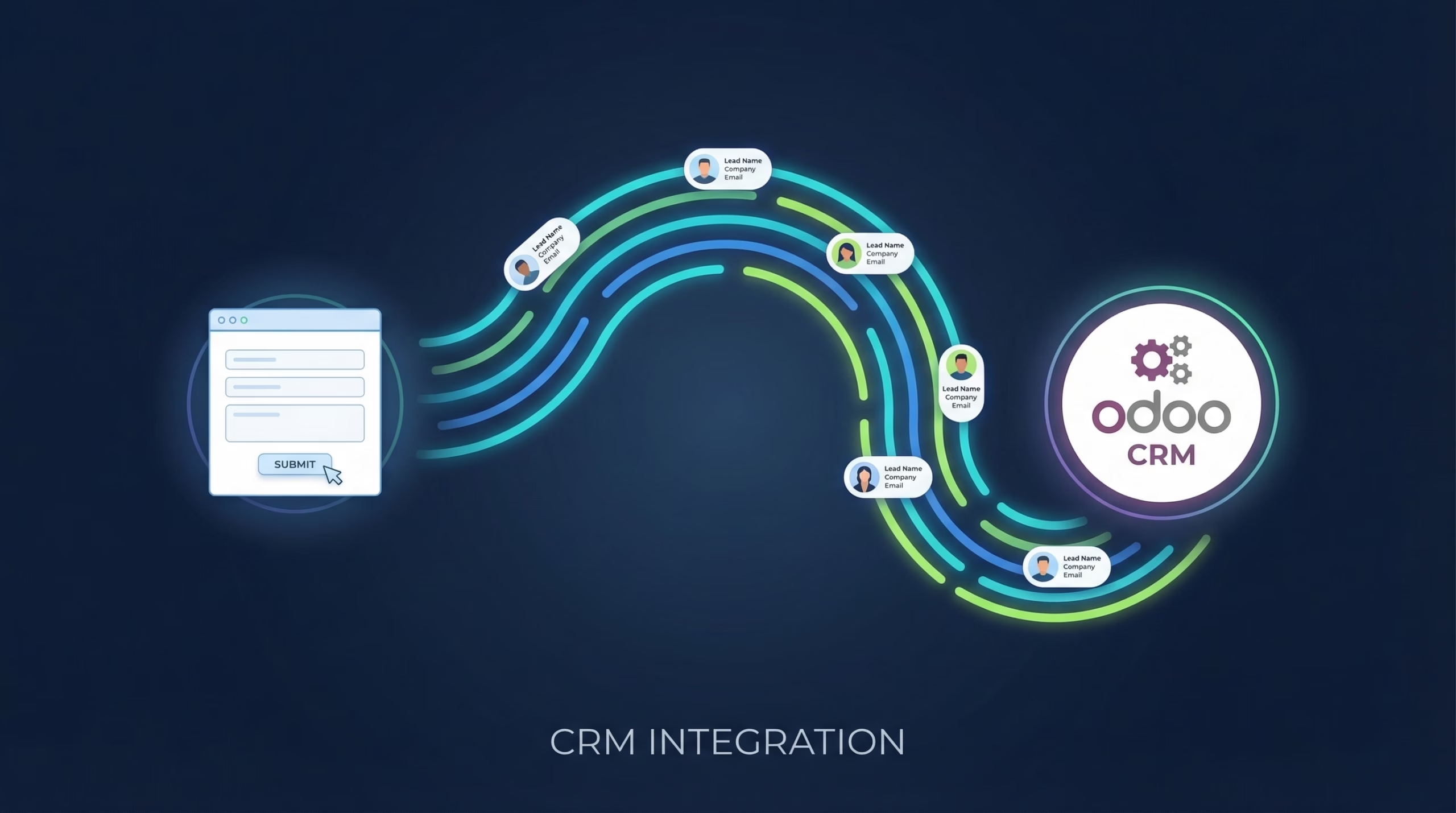
The catch is operational. Every platform traps its leads in its own dashboard, so running three channels means three places to check and three chances for a lead to go cold. This is where a sync tool earns its place: LeadSync pulls leads from Meta, Google, LinkedIn, and TikTok into one CRM or inbox in real time, so no matter which platform a lead came from, your team sees it and follows up within minutes.
Frequently Asked Questions
Which lead ad platform is cheapest?
Meta (Facebook and Instagram) and TikTok are typically the cheapest, with cost per lead often in the $10 to $30 range depending on industry and geography. LinkedIn is the most expensive at roughly $75 to $130 or more per lead, reflecting its premium B2B audience. Google sits in the middle and varies widely by keyword competition.
Which platform is best for B2B lead generation?
LinkedIn, in most cases. It is the only platform with native professional targeting by job title, seniority, company size, and industry, plus account-based targeting. The leads cost more, but for B2B offers with a large enough deal size to absorb a $100-ish cost per lead, the targeting precision is worth it. Google search lead forms are a strong B2B complement for capturing active demand.
Which platform is best for B2C and local services?
Meta and TikTok. Meta’s broad reach and detailed interest targeting make it the default for B2C, e-commerce, and local services like home improvement, fitness, and real estate. TikTok works well when your audience skews younger and your creative is video-first.
What is the difference between Google lead forms and the others?
Google captures existing demand: lead form ads appear when someone is actively searching for what you offer, so intent is high. Meta, LinkedIn, and TikTok create demand by interrupting people in their feed based on who they are or what they are interested in. That difference shapes lead quality, cost, and how you should follow up.
Should I use more than one lead ad platform?
Usually, yes. Most teams combine a demand-capture channel (Google) with one or two demand-creation channels (Meta, LinkedIn, or TikTok) matched to their audience. The main operational challenge is that each platform traps leads in its own dashboard, which is why a sync tool that unifies all of them into one CRM is valuable.
Run Every Platform, Manage Leads in One Place
Whichever platforms you choose, the leads should land in the same system the moment they are captured. LeadSync connects Meta, Google, LinkedIn, and TikTok lead forms to your CRM, email tool, or inbox in real time.
Keep reading: Meta vs Google for lead generation, TikTok vs Meta lead ads, or our guide to LinkedIn Lead Gen Forms.