Frequently Asked Questions
Doesn’t LinkedIn have a native Salesforce integration?
LinkedIn offers lead sync via its marketing solutions ecosystem, but it requires specific Salesforce editions, admin setup on both sides, and gives you limited control over field mapping. LeadSync is a five-minute alternative that maps every form field to any Lead field and works alongside your other ad platforms.
Which Salesforce editions work with LeadSync?
Any edition with REST API access: Enterprise, Unlimited, and Developer. Professional and Starter Suite orgs need an API add-on from Salesforce. LeadSync shows a warning at connect time if your edition does not include API access.
Does LeadSync create Leads or Contacts in Salesforce?
Leads. Each Lead Gen Form submission becomes a new Lead record, so your assignment rules, workflows, and lead processes all fire exactly as they would for any manually entered lead.
Do my Salesforce assignment rules still run?
Yes. LeadSync creates each Lead with auto-assignment enabled, so your active assignment rule routes the new lead to the right owner within seconds of the form submission.
What happens with duplicate leads?
LeadSync respects your org’s duplicate rules as configured. If your rule allows duplicates with an alert, the lead saves and the alert is recorded. If your rule blocks duplicates, the save is blocked, exactly as it would be for manual entry.
What if my Lead Gen Form doesn’t ask for a company?
It almost always does: LinkedIn pre-fills company name from the member’s profile, which is one of the reasons LinkedIn leads suit Salesforce so well. If a submission somehow lacks one, LeadSync fills Company with the lead’s name so the record is always created.
How fast do leads reach Salesforce?
In real time, typically under 60 seconds from form submission.
Quick Start Summary
LeadSync sends your LinkedIn Lead Gen Form submissions into Salesforce as Lead records in real time. Connect LinkedIn and Salesforce to LeadSync (both are one-click OAuth), pick the Lead Gen Form you want to sync, map your form fields to Salesforce Lead fields, and send a test lead. From then on, every LinkedIn lead lands in Salesforce within seconds, routed by your assignment rules. Setup takes about five minutes and needs no code.
Why send LinkedIn leads to Salesforce with LeadSync?
LinkedIn Lead Gen Forms and Salesforce are a natural pair: B2B leads with pre-filled job titles and company names, going into the CRM most B2B sales teams run on. The friction is in the middle.
Speed. Leads exported manually from Campaign Manager reach your reps hours or days after submission. In speed-to-lead terms that’s fatal: leads contacted within 5 minutes are 21x more likely to qualify. LeadSync receives the submission from LinkedIn the moment it happens and creates the Salesforce Lead within seconds.
Complete B2B data. LinkedIn pre-fills profile fields, so you’re getting accurate job titles, company names, and work emails. LeadSync maps every one of them, plus your custom qualifying questions, to any field on your Lead object.
Routing. LeadSync creates each Lead with auto-assignment enabled, so your Salesforce assignment rules fire immediately. Territory-based routing, named-account matching, round-robin queues: whatever your admin built, it runs on every LinkedIn lead.
Prerequisites
- An active LeadSync account (start with a 7-day free trial)
- A Salesforce org with REST API access: Enterprise, Unlimited, or Developer edition. Professional and Starter Suite need an API add-on from Salesforce.
- An active LinkedIn Lead Gen Form campaign and access to the ad account
Step 1: Connect your LinkedIn account
- In LeadSync, go to Ad Accounts > LinkedIn and click Add LinkedIn Account.
- Sign in to LinkedIn and authorize LeadSync to access your lead data.
- Your account appears in the table once connected.
LeadSync uses OAuth, so you never share your password and the connection refreshes itself in the background.
Step 2: Connect Salesforce to LeadSync
- Go to Connections and click Add Connection.
- Choose Salesforce from the connection dropdown.
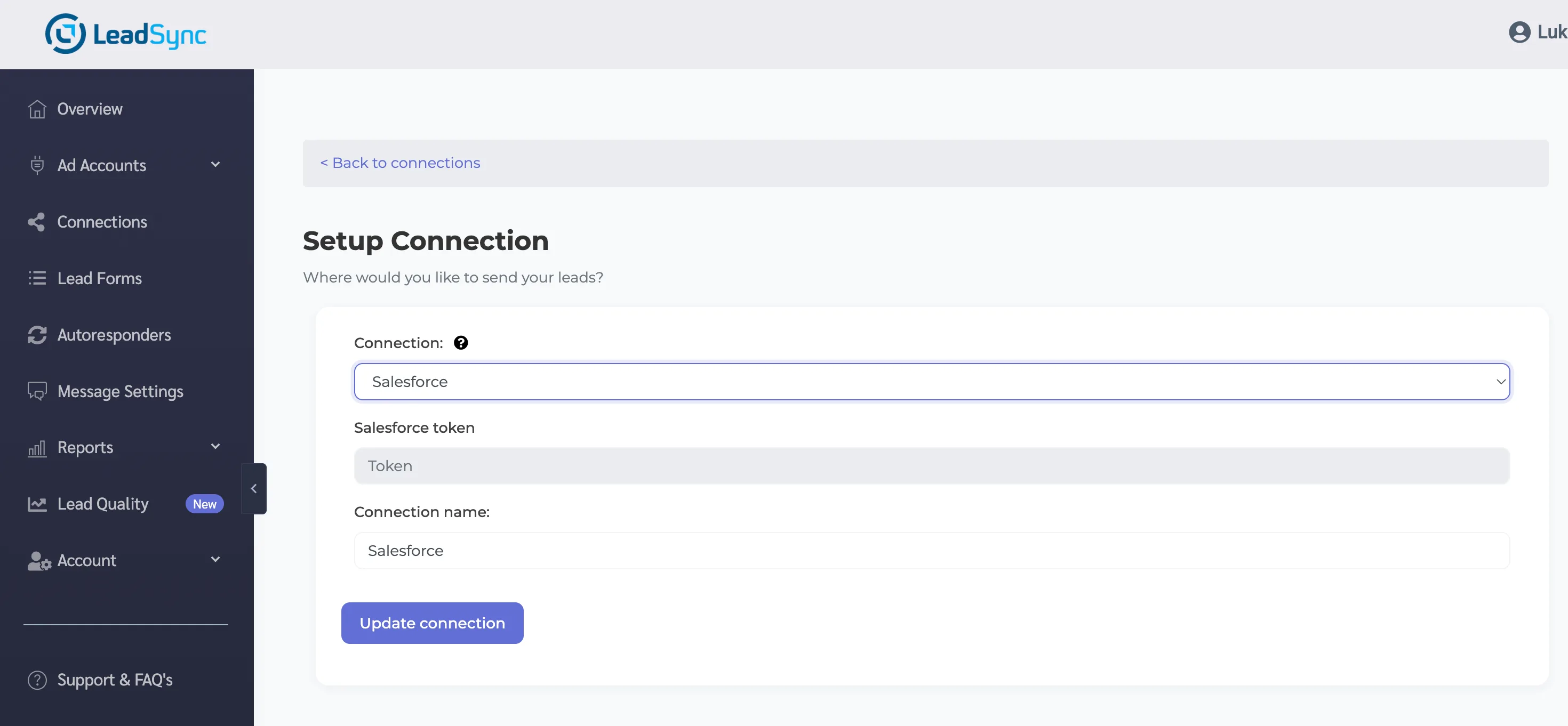
- LeadSync redirects you to Salesforce to authorise the connection. Log in to your org and review the access screen.
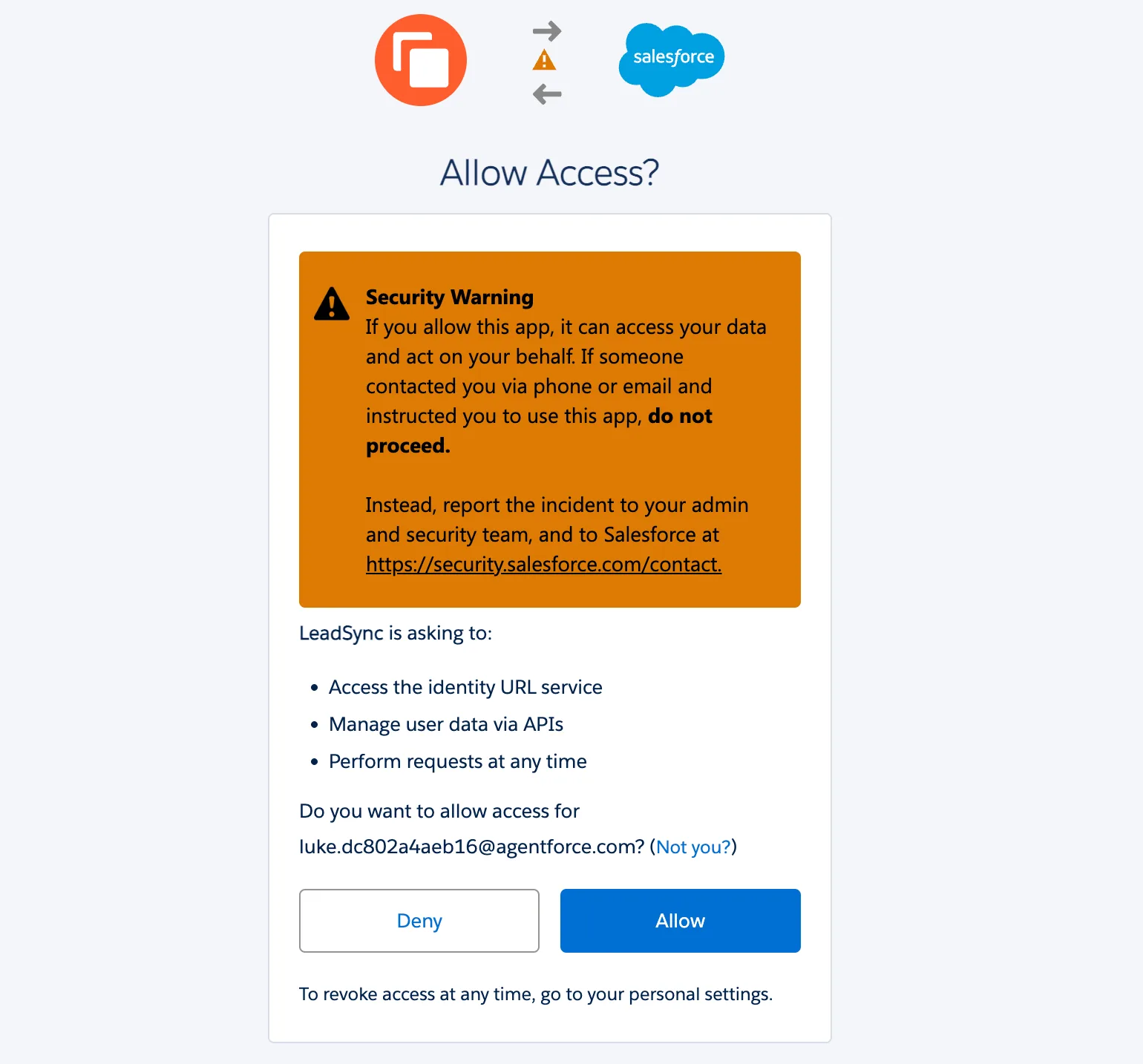
- Click Allow. Salesforce sends you back to LeadSync with the connection details filled in. Give the connection a name and click Update connection.
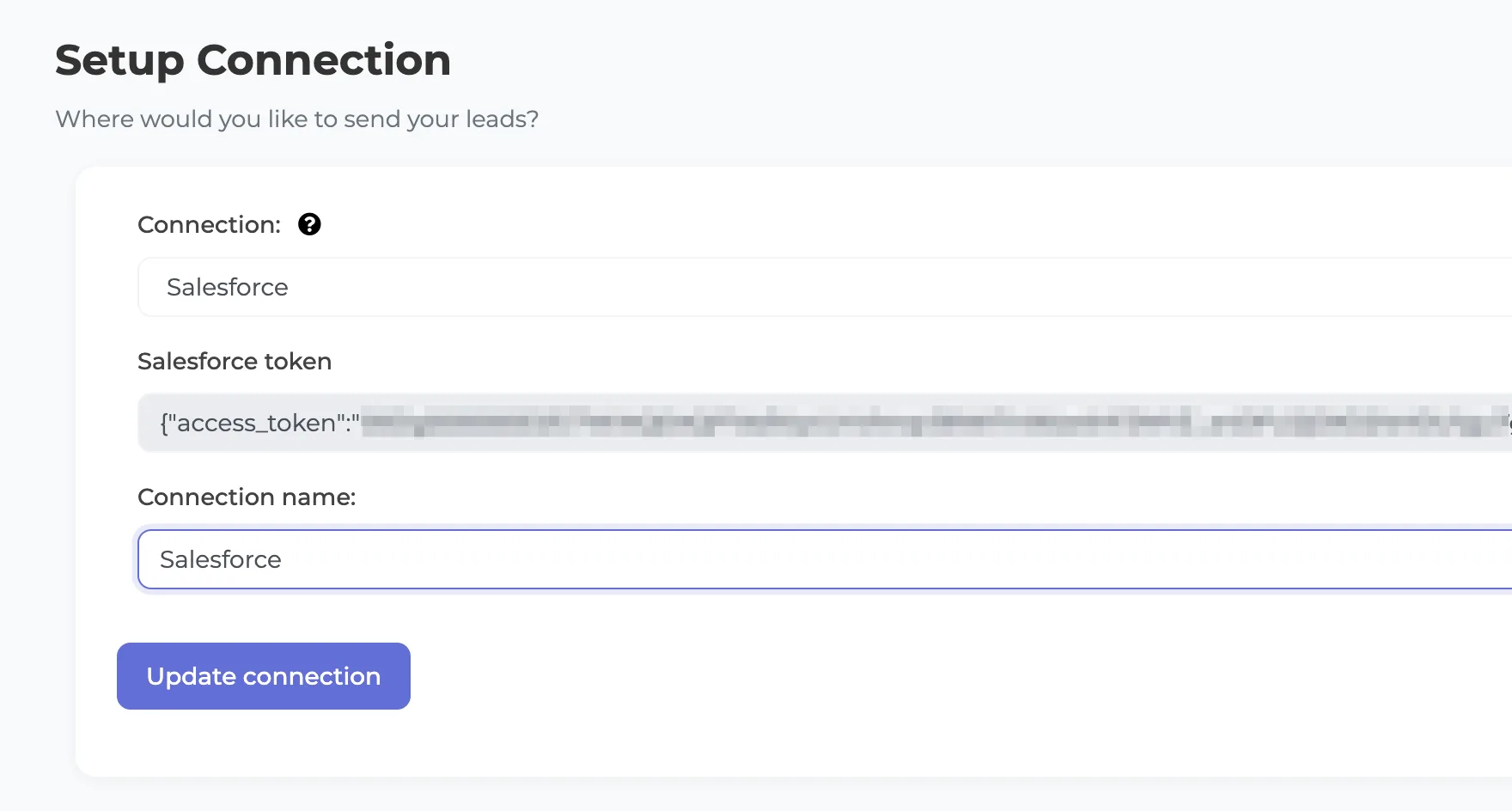
That is the whole connection. LeadSync refreshes its access token automatically from here on.
Step 3: Pair your Lead Gen Form and map the fields
- Click Lead Forms, then Add LinkedIn Lead Form.
- Select your Ad Account, your Lead Gen Form, and your Salesforce connection.
- A field mapping table appears: your form’s fields on the left, a dropdown of your org’s Lead fields on the right. The list is pulled live from Salesforce, so custom fields are all there.
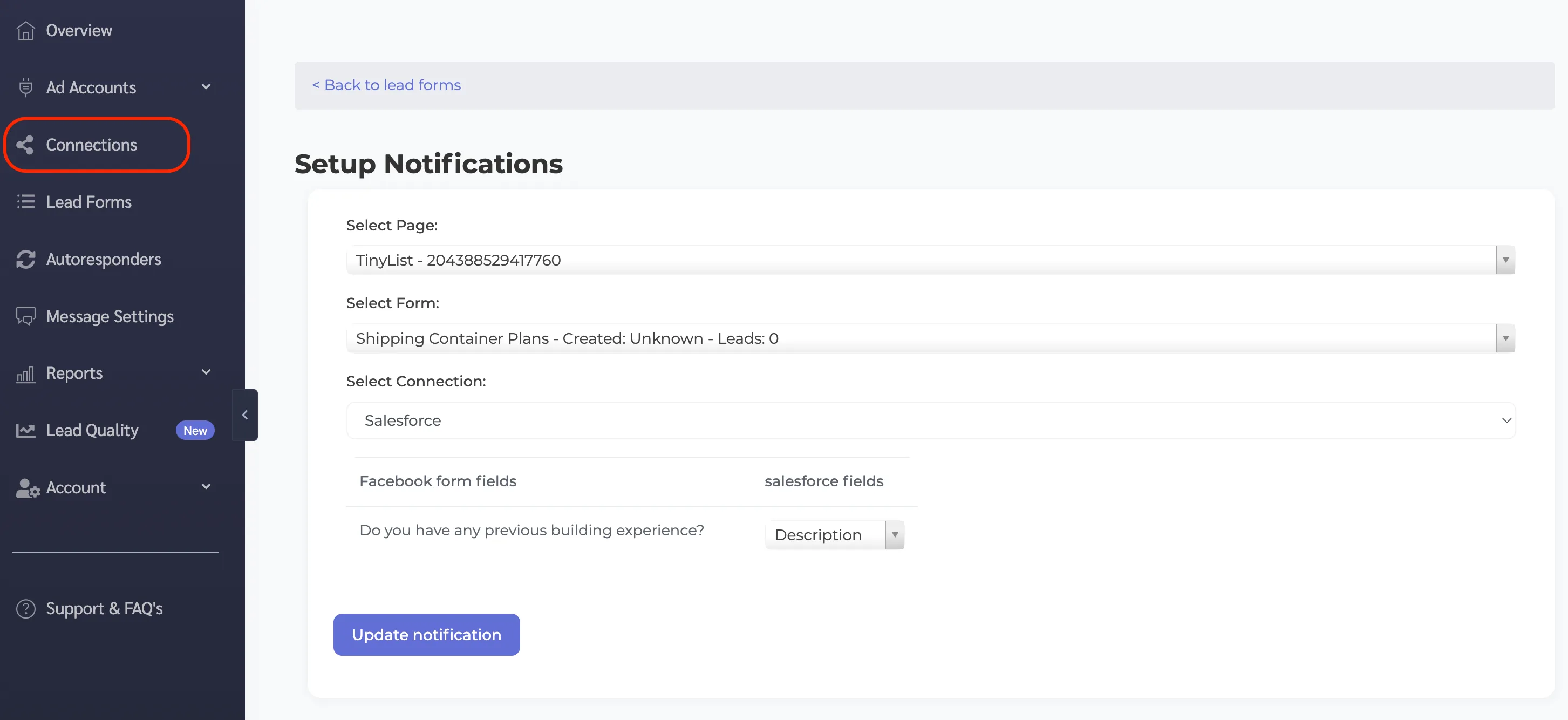
Map the LinkedIn staples to their Salesforce counterparts: Job Title → Title, Company Name → Company, Work Email → Email. Custom question answers can go to custom fields; create those in Salesforce first if they don’t exist yet.
Step 4: Send a test lead
- Save your form connection.
- Submit a test lead through your LinkedIn campaign preview.
- Open Leads in Salesforce. Your test lead appears within seconds with the mapped fields populated.
If the Leads list looks empty, switch the view from “Recently Viewed” to “All Open Leads”.
Assignment rules and duplicates: what happens on arrival
Assignment rules fire. Every Lead is created with auto-assignment enabled, so your active assignment rule routes it to a rep, queue, or territory exactly as if it were entered by hand. Add an email alert to the rule and your rep is pinged seconds after the LinkedIn submission.
Duplicate rules are respected, not bypassed. If your duplicate rule allows with an alert, a repeat submission saves and the alert is recorded. If it blocks, the save is blocked. LeadSync doesn’t force records past the rules your admin configured. For B2B campaigns retargeting the same audience, this matters: repeat enquiries behave however your org decided they should.
Troubleshooting
- Connection warning about API access? Your Salesforce edition may not include the REST API. Enterprise, Unlimited, and Developer editions include it; Professional and Starter Suite need Salesforce’s API add-on.
- Lead not appearing? Check you paired the exact form used in your live campaign, and switch the Salesforce list view to “All Open Leads”.
- A repeat test lead didn’t save? That’s likely your duplicate rule doing its job.
- Still not receiving leads? Work through the troubleshooting guide.
Quick wins after setup
- Add an email alert to your assignment rule so reps are notified the moment a LinkedIn lead lands
- Map job title and company to the Lead page layout so reps see the B2B context before the first call
- Create a “LinkedIn” Lead Source report to track LinkedIn-sourced pipeline separately from your other channels
Related integration guides
Running ads on more than one platform? LeadSync routes them all into Salesforce through the same pipe:
- How to send Facebook leads to Salesforce
- How to send Google Ads leads to Salesforce
- How to send LinkedIn leads to HubSpot
- How to send LinkedIn leads to Google Sheets
Ready to close the gap between LinkedIn and your pipeline? Start your free 7-day LeadSync trial.