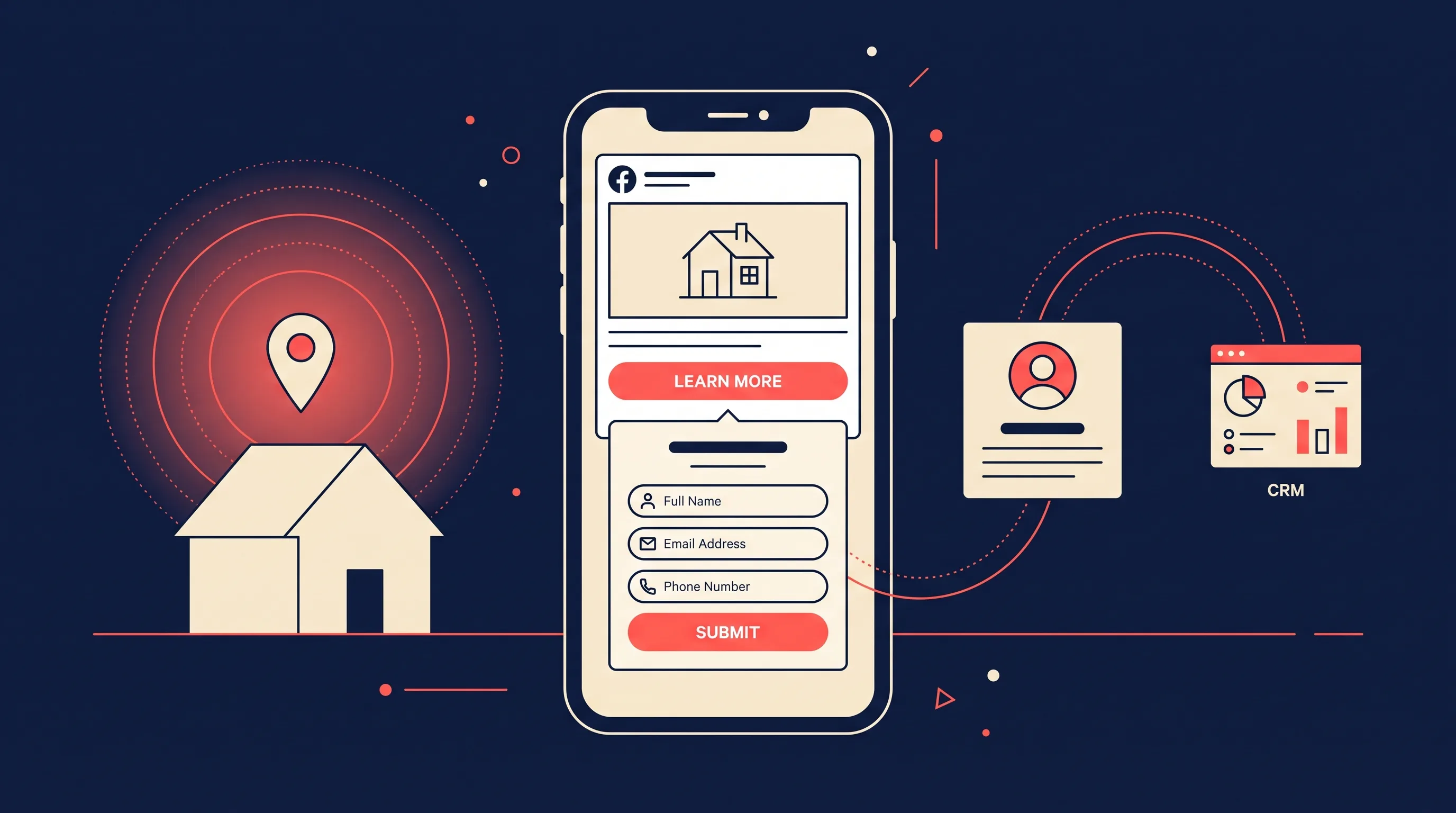
Real estate agents run more Meta lead ads than any other industry, and the reason is not complicated. A homeowner who taps “What’s my home worth?” and submits a form that Facebook has already filled in has just told you they are thinking about selling, and they have done it in less time than it takes to find an agent’s website.
This guide is a full rewrite of the version we first published in 2024. It folds in our step-by-step campaign walkthrough, the example roundup and the follow-up guide that used to live as separate posts, and it covers what has changed since: the Housing Special Ad Category rules that now govern who you can target, the offers still pulling leads in the Meta Ad Library, what to put on the form, what a lead should cost, and the system that turns a $20 lead into a listing appointment before another agent calls.
Why Facebook lead ads work for real estate
Three numbers explain the format’s grip on the industry.
When we analysed the Facebook pages running lead ads through LeadSync for our Meta Lead Ads industry report, real estate was the largest category and it was not close. Real estate instant forms also convert at about 9.5%, well above the 7.72% cross-industry average, because the offers are things people genuinely want to know: what their home is worth, what just sold on their street, what is coming to market before it hits the portals.
The second number comes from the buyers themselves. In the National Association of Realtors’ 2025 Profile of Home Buyers and Sellers, 46% of buyers started their search online and 88% bought through an agent. The search starts on a screen and ends with a person, and a lead ad is the shortest line between the two.
The third is mechanical. A Meta lead ad opens an instant form inside the Facebook or Instagram app instead of sending the person to your website. Name, email and phone are pre-filled from their profile, the whole thing takes three taps on a phone, and you do not need a landing page or, strictly, a website at all. That removes the step where most real estate traffic dies: the moment a curious homeowner has to type their details into a form on a page they have never seen. We compare the two approaches in detail in our guide to Meta instant forms.
Two pipelines come out of the same format. Seller leads, which become listings, come from offers only an owner wants. Buyer leads come from offers only a buyer wants. Most agents want the first, so most of this guide leans that way, and the buyer-side offers are covered in their own section.
The Housing Special Ad Category: what you can and can’t target

Every ad that promotes property for sale or rent, a home valuation, a mortgage, home insurance or a related service must be declared under Meta’s Housing Special Ad Category before it is published. Meta introduced the categories after settlements with US civil rights groups over Fair Housing Act complaints, and the rules apply to housing ads everywhere, not only in the United States.
Once you declare the category, Ads Manager enforces the following:
- No ZIP code or postcode targeting. You can target by country, state or region, city, or drop a pin and set a radius, but the radius cannot be smaller than 15 miles (24 km in most markets, 25 km in Canada).
- No age targeting. The range is fixed at 18 and over. You cannot narrow it.
- No gender targeting. Every ad runs to all genders.
- A shortened interest list. Detailed targeting options Meta considers linked to protected characteristics, including most life-stage and demographic segments, are removed.
- No lookalike audiences. The Special Ad Audience feature that briefly replaced lookalikes for these categories has since been retired and has not come back.
- No Advantage+ Audience. You build the audience manually with Original Audiences.
- Fair Housing wording rules. Copy and creative cannot express a preference for, or exclude, anyone on the basis of race, religion, sex, family status, disability or national origin.
If you run a housing ad without declaring the category, Meta’s review rejects it. Do it repeatedly and the ad account is flagged for review or disabled, and in the US you have also created a Fair Housing Act problem that has nothing to do with Meta. Our full explainer on Special Ad Categories covers the other three categories and how to appeal a rejection.
Working inside the rules
The restrictions look worse than they are, because the levers that matter most in real estate were never demographic.
Geography still works, just at a coarser grain. Target the city, or a 15-mile circle around your farm area. If your patch is smaller than that, the ad creative does the local filtering for you: a map of the suburb, the suburb’s name in the headline, a photo of a recognisable street. People outside the area see the ad and scroll; people inside it stop. Our geotargeting guide covers radius and city targeting in detail.
The offer does the qualifying. A free home valuation only interests owners. A first-home-buyer guide only interests buyers. A “what sold on your street” report only interests people who live on that street. When you cannot narrow by age or income, you narrow by what someone chooses to click.
Custom Audiences are still allowed. Upload your past clients and sphere of influence as a customer list. Retarget people who visited your website through the Meta Pixel, or who watched your video ads or engaged with your page. These audiences are built from your own data, so the housing restrictions do not remove them, and they are usually the cheapest leads in the account. Our targeting guide walks through building each one.
Watch the words. Describe the property, not the buyer. HUD’s Fair Housing Act guidance and every state fair housing body publish lists of phrases to avoid; the pattern is easy to remember once you have seen it.
| Avoid | Say instead |
|---|---|
| “Perfect for young families” | “Four bedrooms, fenced backyard” |
| “Exclusive neighbourhood” | “Quiet residential street” |
| “Walking distance to St Mary’s” | “Close to schools and places of worship” |
| “Ideal for retirees” or “young professionals” | “Single-level living” or “Two blocks from the train” |
| “Safe area” | “Parks and playgrounds nearby” |
| “No children” or “singles preferred” | Say nothing about who should apply |
Five offers that keep pulling real estate leads
We pulled the longest-running real estate lead ads from the public Meta Ad Library for our real estate Facebook ad examples post and ranked them by how long the advertiser kept paying for them. The longest has run for more than 850 days. Nobody funds a losing ad for two years, so runtime is the most honest signal of what works. Five offers dominate.
1. The free home valuation

Five of the eight longest-running ads are variations on one question: what is your home worth? Every owner is curious about the number, including the ones with zero intention of selling this year, and a share of the curious become sellers within twelve months. The framings that keep working are “no obligation”, the real value against the automated portal estimate, and “worth more than you think”. Ask for the address on the form and the lead arrives ready to research.
2. Coming soon and off-market lists
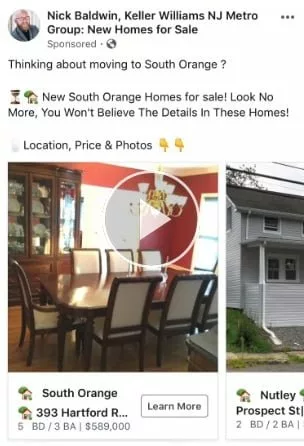
The buyer-side equivalent. “Be the first to see homes before they hit the portals” gives an active buyer a reason to hand over their details, and it gives you a list to email every time a listing signs. Ylopo, a real estate marketing platform, ran this angle for a New Jersey agent with the headline “Thinking about moving to New Jersey?” over photos of homes in the target price band, and Meta’s published case study reported a 7.6x return on ad spend and a 43% lower cost per lead than the agent’s other online sources.
3. The first-home-buyer guide
A downloadable guide to buying in your city, or a “how much can you borrow” calculator, catches buyers six to twelve months before they are ready. It pairs well with a mortgage broker, who can co-fund the campaign and take the finance conversation; our guide to Facebook ads for mortgage brokers shows the same offer from the broker’s side.
4. Open house and virtual tour registration
Registering for an open house or a live virtual tour is a low-commitment ask that still identifies someone shopping in a specific price band. The listing does the targeting: people who register for a $1.2 million open house are $1.2 million buyers, or their sellers.
5. The local event or market update
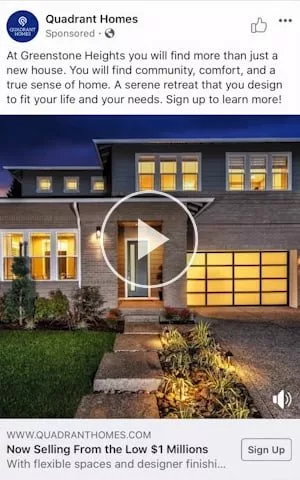
A free seminar on selling in a rising-rate market, an investor evening, or a quarterly “what sold in your suburb” report. IGrow Wealth Investments used a lead ad to fill a free property seminar in a single suburb, which generated the lead online and then delivered the person to the door for real-life nurturing. Quadrant Homes built an entire campaign around community: local landmarks, buyers’ testimonials and the word “neighbours” in the copy. Both work because in a small area a share of the audience recognises the faces and the places.
Setting up a real estate lead ad campaign, step by step
The full generic walkthrough, including budgets, bidding and troubleshooting, lives in our complete guide to Meta lead ads. These are the real estate specifics.
- Create a campaign with the Leads objective. Choose the manual setup rather than the automated recommendation so you keep control of the audience.
- Declare the Housing category. The Special Ad Category prompt appears at campaign level. Select Housing. If you skip it, the ad is rejected at review.
- Set the budget. $10 to $20 a day per ad set is enough to learn. Name the campaign for the season and the ad set for the location; spring listing campaigns are a different animal from winter ones and you will want to compare them later.
- Choose Instant Forms as the conversion location and select your Facebook page. First-time lead advertisers are asked to accept Meta’s lead ads terms here. Leave the optimisation on maximising the number of leads for the first few weeks.
- Build the audience. City or a 15-mile radius, all ages, all genders, and whichever interests remain available in the shortened list. Add your Custom Audiences as separate ad sets so you can see their cost per lead on its own.
- Create three or four ad variations that share one form, using the creative approach in the next section.
- Build the lead form. The video below walks through it in three minutes. You must link a privacy policy; if you do not have one, our free privacy policy generator produces one.
- Publish, then connect the leads. Set up notifications and the CRM push before the first lead arrives, not after. The follow-up section explains why.
What to ask on the form
The form is where most agents either lose the lead or lose the information that would have qualified it. Meta allows up to 15 questions, and the right number is usually four or five.
- Name, email and phone pre-fill from the profile. Keep all three; a lead with only an email is a newsletter subscriber, not a lead. See which fields Meta can pre-fill, including street address and city.
- Property address if the offer is a valuation or a “what sold near you” report. Meta’s pre-filled address field works when the person has one on their profile; otherwise a short-answer question does the job.
- One intent question, multiple choice, that decides what happens next: “When are you thinking of selling?” with “Within 3 months”, “3 to 12 months” and “Just curious”. Buyers get “When are you looking to buy?” and a price-range question. This one answer decides who gets a call in the next five minutes and who enters the nurture sequence.
- Form type. Choose “higher intent” for valuation and listing offers. It adds a review step before submission, which cuts accidental submissions and raises the cost per lead slightly in exchange for better leads. “More volume” suits guides and event registrations.
- The thank-you screen. Add a call button with your mobile number and a line that says when they will hear from you. A share of leads call you before you have called them.
Ad creative and copy that work in a real estate feed
Real estate feeds are crowded with “just listed” posts, and the standard house photo has become wallpaper. The ads that stop the scroll do one of three things: show the place, show the people, or show the number.
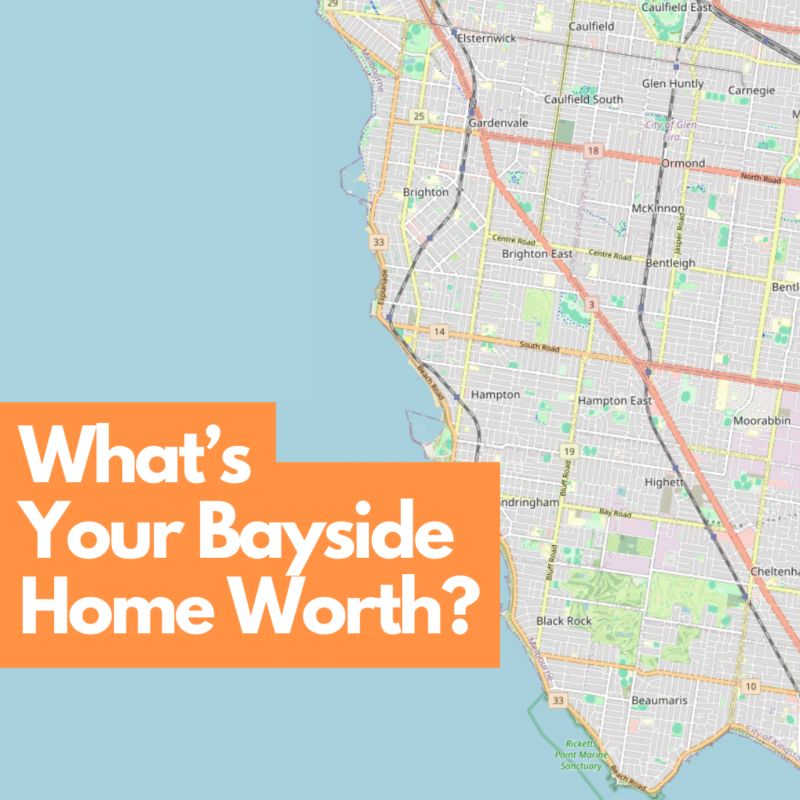
Show the place. For a suburb-level campaign, the creative we have had the most success with is a screenshot of the target area from OpenStreetMap, dropped into Canva with a short call to action over it. People recognise their own streets instantly. Make four to six versions at 1200 by 1200 pixels, or pay a designer on Fiverr $50 to do it, and rotate them.
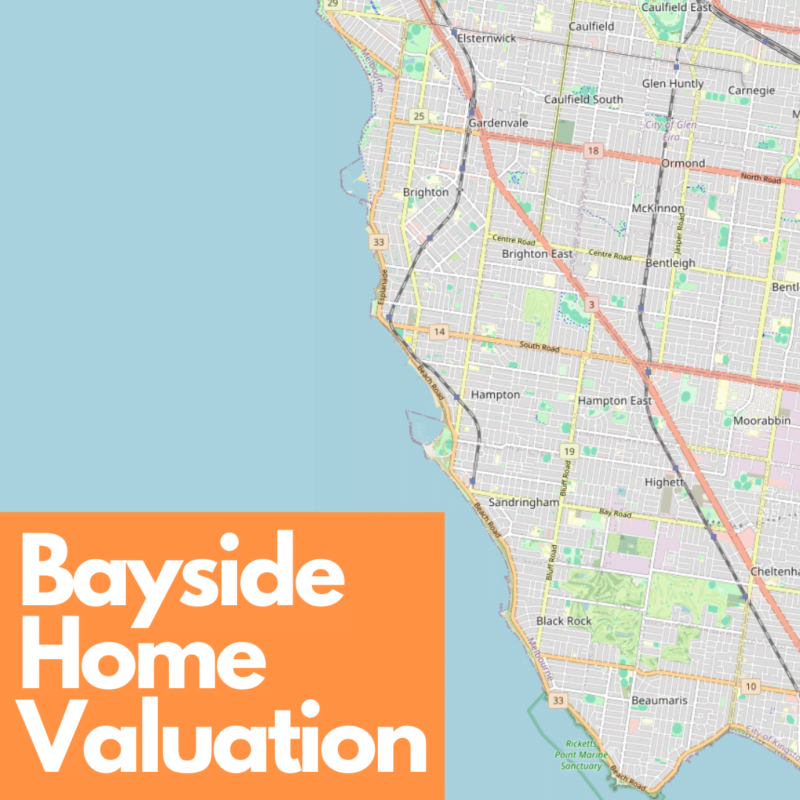
Show the people. Testimonials with faces, with the client’s consent, are the most trusted creative you own in a connected community, and a carousel of interior photos beats one exterior shot. Apartment Guide turned a listings carousel into a lead ad with almost no copy and reported double the property-enquiry conversion rate of its previous campaigns.
Show the number. “Homes in [suburb] sold for 6% more than the asking price last quarter” is a headline. “Your home may be worth more than you think” is the ad most sellers eventually click.
For the primary text, a pattern that has held up across dozens of campaigns:
Wondering what your Bayside home is worth right now? Interest rates have moved and some local prices have shifted a lot in the last year. Tap Learn More for an accurate, current valuation from a local agent. No obligation, no generic online estimate.
Put the suburb in at least one headline variation, keep the CTA on “Learn more” or “Get quote”, and let the map creative and the offer carry the targeting. Our guide to writing ad copy for Facebook lead generation has more formulas, and the Ad Library shows you what the top agents in your market are running today.
What real estate leads cost on Facebook
Across the benchmark data we track in our cost per lead guide, real estate sits near the middle of the table.
| Metric | Real estate benchmark |
|---|---|
| Average cost per lead | $16.61 |
| Typical range | $10 to $35 |
| Instant form conversion rate | 6 to 9% |
| Instant form vs landing page | Forms 20 to 30% cheaper per lead |
| Fourth-quarter premium | Costs 25 to 40% higher than Q1 |
The range is wide because the offer sets the price. Valuation leads in a competitive metro market run toward the top of it; open-house registrations and guide downloads run toward the bottom. Custom Audience retargeting usually comes in under $10.
The number to compare it against is what a lead is worth to you, not what other agents pay. A $600,000 listing at a 2.5% commission is $15,000 in gross commission. If one valuation lead in fifty becomes a listing, each lead is worth $300, and a $25 lead is a bargain. If one in two hundred does, the same lead is worth $75 and still profitable. Work the arithmetic for your market and price band before you judge a campaign on cost per lead alone; our ROAS guide walks through it.
Follow up in the first five minutes

This is the section that decides whether the campaign makes money, and it is the one most agents skip.
A valuation lead is an owner who was curious for thirty seconds. They submitted a form that took three taps, they have probably submitted two more to other agents in the same session, and they are still scrolling. Research at MIT covered in our speed to lead guide found that a response inside five minutes is 100x more likely to reach the lead and 21x more likely to qualify them than a response at thirty minutes. The average business takes 47 hours. Most real estate leads die of neglect, not of poor quality.
The delay is structural. Meta stores submissions in the page’s Leads Center, keeps them for 90 days, and sends the page admin a notification that is easy to miss and impossible to route to the right agent. If you download leads from Facebook as a CSV once a day, the average lead is twelve hours old before anyone reads it.
The fix is a pipeline, and it takes about ten minutes to set up:
- Instant alert to the agent. An email notification and an SMS notification with the lead’s name, phone, address and intent answer, sent the moment the form is submitted. Route by form or by campaign so the listing agent gets seller leads and the buyer’s agent gets buyer leads.
- Automatic push to the CRM. LeadSync sends Facebook and Instagram leads to Follow Up Boss, Top Producer, RealtyJuggler, GoHighLevel, HubSpot, Zoho, Pipedrive, Salesforce, ActiveCampaign and Google Sheets, with the custom question answers mapped to fields and a source tag so your CRM’s action plans fire immediately. Not sure which CRM? Our comparison of the best CRMs for real estate covers the options.
- An automatic text to the lead. A text message to the lead within sixty seconds (“Hi Sarah, it’s Luke from Bayside Realty. Got your request for a valuation on Elm Street, I’ll call you in the next few minutes. Is now a good time?”) holds the conversation open until you can call.
- A cadence for the ones who do not answer. Day one: call and text. Day two: email with the three most recent sales near their address. Day five: call again. Then a monthly market update until they are ready. The how often to follow up guide has the full schedule.
That pipeline is the whole reason LeadSync exists. Real estate agents are our largest customer group, because a lead sitting in Leads Center for a day is a lead another agent has already called.
Beyond the neighbourhood: relocation, commercial and rental leads
The same format covers the corners of the market that do not fit the suburb-farming model.
Relocation buyers. The buyer moving to your city from another one is worth targeting on purpose, and the Housing rules allow it: set the location to “people living in” the feeder cities your market draws from, and lead with a relocation guide or the coming-soon list. The Ylopo campaign above is exactly this play. If your area has corporate relocation traffic, a “moving to [city] for work” guide with school, commute and rental-market sections captures people months before they call an agent.
Commercial property. Ads for commercial sales and leasing generally sit outside the Housing category, which gives you detailed targeting back. Think about who signs a commercial lease and target that: business owners, the business decision-maker segments, and industry interests. Our guide to B2B Facebook ads covers targeting decision-makers on Meta, and the lead form should ask for company, role and the space or budget they need.
Rentals and property management. Rental listings are Housing ads and follow the same rules; the offer is the listing itself with an inspection-booking form. For management, target owners rather than tenants, with a free rental appraisal or a management-fee comparison, and see our separate guide to property management leads.
Mortgage and finance. Mortgage ads fall under the Credit category, with its own restrictions. Brokers and agents who co-fund campaigns should read our mortgage broker Facebook ads guide before sharing a lead form, and our mortgage lead generation guide covers the RESPA rules on co-marketing.
Google Search. The owner who has already decided to sell types “realtor near me” or “how much is my house worth” into Google rather than waiting for an ad to find them. Those leads cost more and sit closer to a transaction. Our guide to Google Ads for real estate covers Local Services Ads, what the keywords cost and the lead form asset; most agents run it alongside the Facebook campaign and send both into the same CRM.
Measuring the campaign: four numbers that matter
Ads Manager shows dozens of metrics. Four decide what you do next.
- Cost per lead, by ad and by ad set. Kill any ad running at double the campaign’s median after 30 or so leads, and give its budget to the winner.
- Form conversion rate. Below 6% usually means the offer and the creative promise different things, or the form asks too much.
- Contact rate. The share of leads you actually reach by phone in the first day. If this is under half, the problem is your response time, not the ads. Our reporting guide shows how to track it.
- Appointment rate. Leads that become a valuation appointment or a viewing. This is the number that tells you whether “cheaper” leads are actually better leads, and it is the one to feed back to Meta through the Conversions API so the algorithm optimises for appointments rather than form fills.
Test one variable at a time: creative first, then the offer, then the form type. Targeting is the last thing to touch, because under the Housing rules there is not much of it to change.
Your ads fill the form. Your speed wins the listing.
Every agent in your market can copy the offers in this guide, and most of them already run some version of the valuation ad. What they cannot copy is a response inside five minutes, every time, including at 9pm on a Sunday. Start a free 7-day LeadSync trial, connect your page in a few minutes, and the next lead lands on your phone and in your CRM before the homeowner has finished scrolling.
Frequently Asked Questions
Do Facebook ads still work for real estate in 2026?
Yes. Real estate is the largest single industry running Meta Lead Ads, real estate instant forms convert at about 9.5% against a 7.72% cross-industry average, and the Meta Ad Library shows agents funding the same home valuation ads for one to two years straight. Nobody pays for a losing ad that long. What has changed is targeting: housing ads now run under the Special Ad Category, so the offer and the follow-up matter more than audience settings.
How much do real estate Facebook lead ads cost?
Across the benchmark data we track, real estate averages about $17 per lead, with a normal range of $10 to $35 depending on the market and the offer, and a form conversion rate of 6 to 9%. Instant forms cost 20 to 30% less per lead than sending traffic to a landing page. Costs rise 25 to 40% in the fourth quarter when holiday advertisers crowd the auction.
Can I target real estate ads by ZIP code or age on Facebook?
No. Ads for home sales, rentals, mortgages, appraisals and related services must be declared under Meta’s Housing Special Ad Category, which removes ZIP code and postcode targeting, fixes the age range at 18 and over, includes all genders and disables lookalike audiences. You can still target by country, state, city or a pin with a radius of at least 15 miles, and you can still use Custom Audiences built from your own contacts, website visitors and page engagers.
What is the Housing Special Ad Category and do I have to use it?
It is the setting in Ads Manager that tells Meta an ad relates to housing, so Meta can apply the targeting limits required under the US Fair Housing Act and equivalent laws elsewhere. If you advertise property for sale or rent, home valuations, mortgages or home insurance, you must select it. Ads that should have been declared and were not are rejected, and repeat offenders can lose the ad account.
What should a real estate lead form ask?
Keep it to five fields or fewer. Name, email and phone pre-fill from the person’s profile. Add the property address if the offer is a valuation, and one multiple-choice intent question such as “When are you thinking of selling?” with answers like “within 3 months”, “3 to 12 months” and “just curious”. That single question tells you who gets a call today and who goes into the nurture sequence.
How do I generate seller leads rather than buyer leads?
Lead with an offer only an owner wants: a free home valuation, a “what sold near you” report, or a pre-listing checklist. Show a map of the area or a recently sold home in the creative, name the suburb in the headline, and ask for the property address on the form. Buyer offers, such as coming-soon lists, first-home-buyer guides and open-house registrations, attract the other side of the market.
How fast should I follow up a Facebook real estate lead?
Within five minutes, and faster if you can. MIT research on 15,000 leads found a response inside five minutes is 21x more likely to qualify the lead than a response at 30 minutes, and 100x more likely to actually reach them. Most agents take hours because the lead sits in Meta’s Leads Center. An instant SMS or email alert and an automatic push to your CRM removes that delay.
How do I get Facebook leads into Follow Up Boss or another CRM?
Connect your Facebook page to a lead sync tool such as LeadSync, choose the form and map its fields to the CRM. LeadSync sends leads to Follow Up Boss, Top Producer, RealtyJuggler, GoHighLevel, HubSpot, Zoho, Pipedrive, Salesforce, ActiveCampaign, Google Sheets and email or SMS within about a minute of submission, including the custom question answers and a source tag for routing.
What budget do I need to start real estate lead ads?
Ten to twenty dollars a day per ad set is enough to learn. At a $20 cost per lead that is roughly one lead a day, which lets you judge lead quality and cost within two weeks before scaling. Run three or four creative variations against the same form and move budget toward the cheapest qualified leads, not the cheapest leads.
Are Facebook real estate leads good quality?
They are curious rather than committed, which is normal for the top of a real estate funnel. A valuation lead is an owner who wondered what their home is worth; the intent question on the form separates the ones planning to sell this year from the ones checking. Quality improves when you use the “higher intent” form type, ask an intent question, and call inside five minutes while the person still remembers submitting.
Should real estate agents use lead ads or send people to a landing page?
Lead ads for the first contact, a landing page for people who already know you. Instant forms open inside Facebook and Instagram, pre-fill the contact details and cost 20 to 30% less per lead. A landing page makes sense for retargeting warm audiences with property-specific pages, or when you need a longer qualifying step such as a mortgage pre-approval.
Can I use Facebook lead ads for rentals and property management?
Yes. Rental listings and property management services are also Housing category ads, so the same targeting rules apply. For rentals, the offer is the listing itself with an inspection-booking form. For property management, target owners with a free rental appraisal or a management fee comparison, and see our separate guide on property management leads.
Ad examples shown are publicly available in the Meta Ad Library or in Meta’s published case studies and remain the property of their respective advertisers. They are included for commentary and education. LeadSync is not affiliated with any advertiser shown, or with Meta.