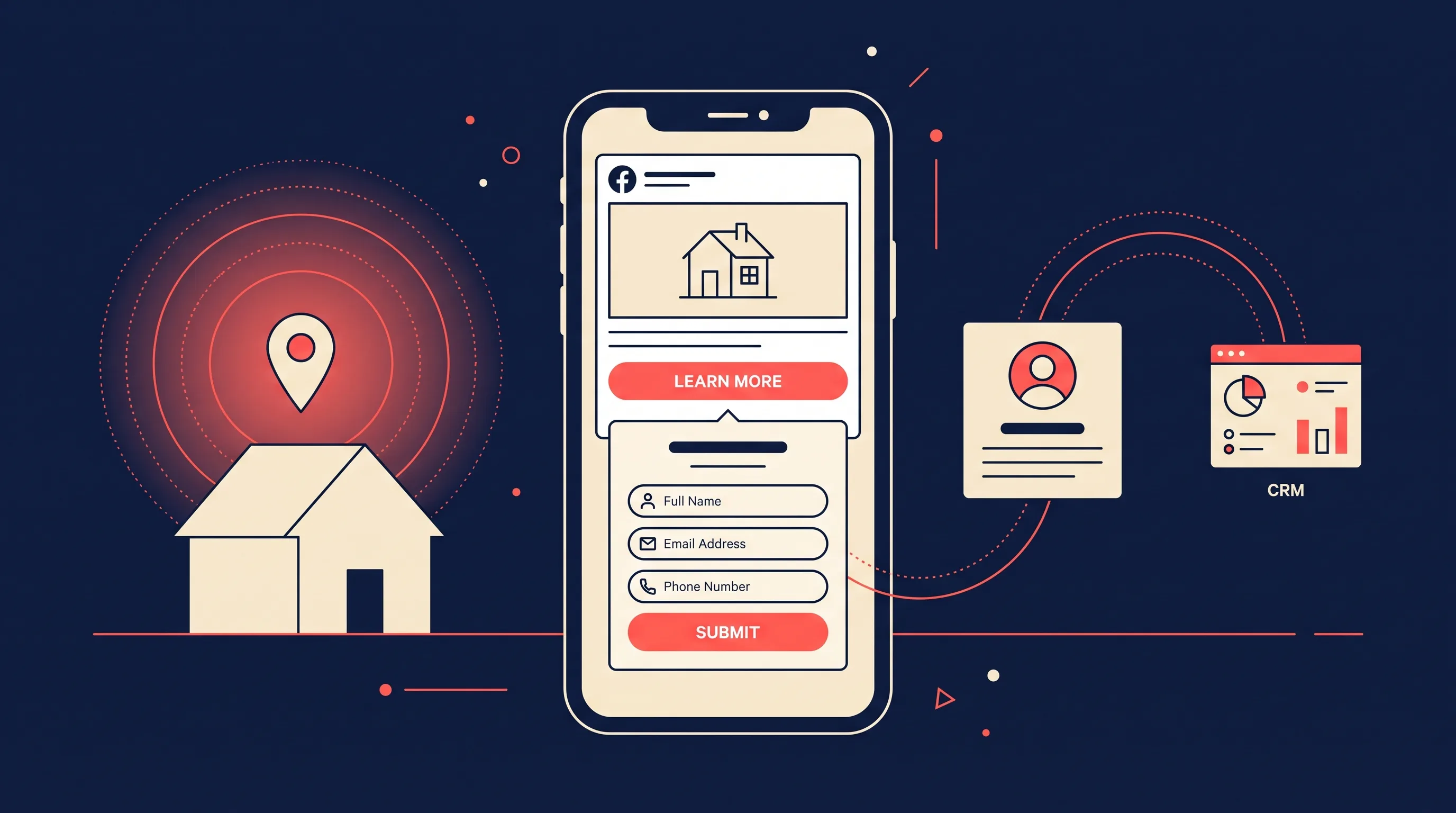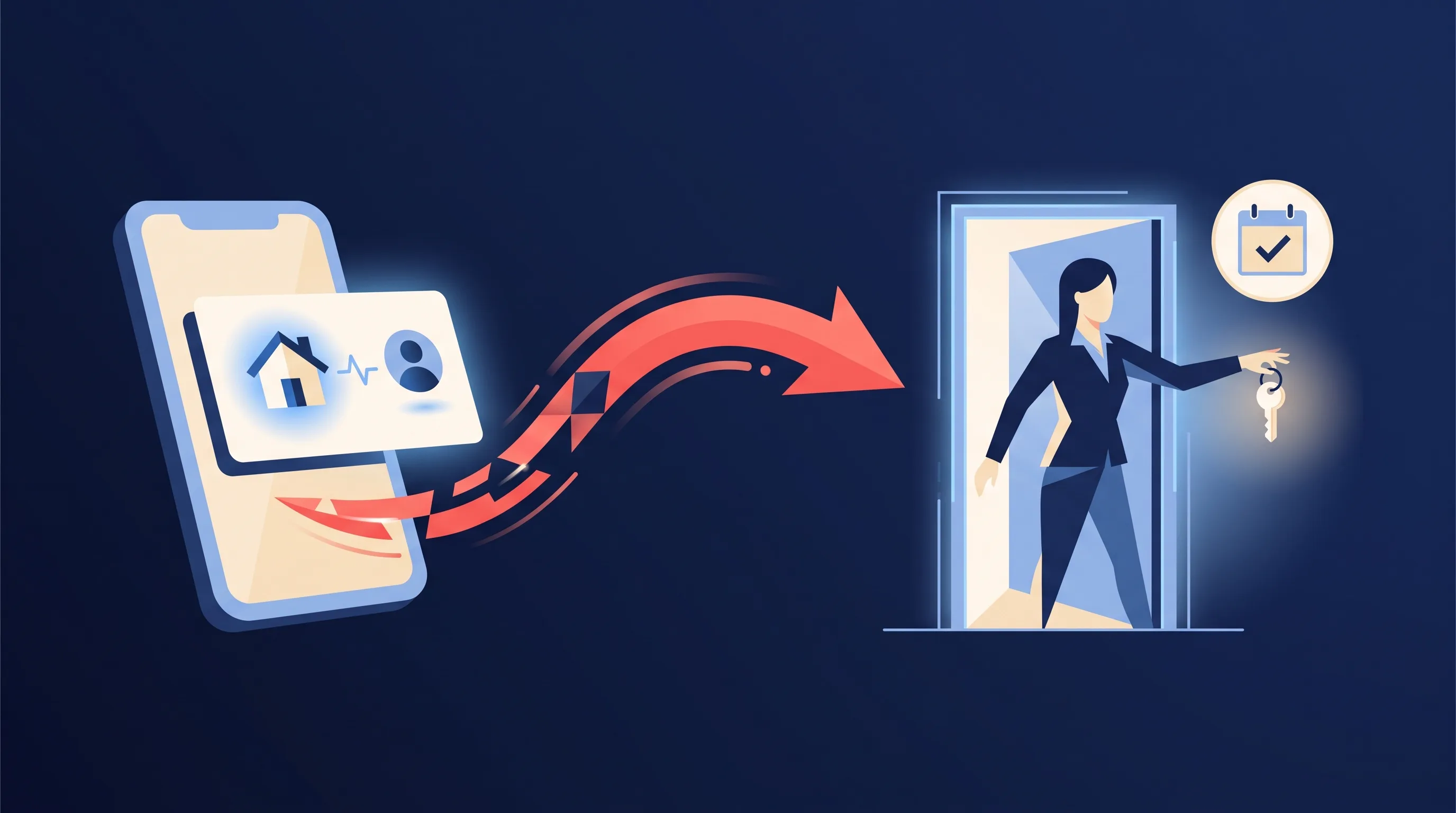
A real estate lead is a person with their phone in their hand, comparing you against three or four other agents right now. The form took them 20 seconds. What happens in the next five minutes decides whether you are the agent they remember.
Most agents lose that window without noticing. The lead sits in Meta’s Leads Center, or in an inbox, until someone checks. By then the lead has heard back from somebody else.
This guide covers how to respond to a real estate lead in a way that actually converts: how fast, on which channel, what to say (six scripts you can copy), how often to keep following up, and how to build a system that does the first minute for you while you are at an open house.
How fast should you respond to a real estate lead?
Inside five minutes. That number comes from the MIT study of 15,000 leads that found a response within five minutes is 100 times more likely to reach the person, and 21 times more likely to qualify them, than a response at 30 minutes. Harvard Business Review’s follow-up analysis of 2.24 million leads reached the same conclusion: the curve falls off a cliff after the first few minutes.
The average business responds in about 47 hours. Only 7 to 23 percent respond within five minutes. Timing is a big part of why: 75% of Facebook leads arrive outside office hours, and the busiest hour of the week is Sunday at 9pm. In real estate that gap is the whole game, because the lead is not waiting politely for you. A seller asking for a valuation on Facebook has usually asked two other agents the same day. A buyer registering for an open house is on four other agents’ lists by Sunday.
So the honest answer to “how fast” is “faster than you can do by checking a dashboard”. If your process depends on you noticing a lead, you are already late. The fix is an instant SMS or email alert the moment the form is submitted, which we come back to in the system section.
Should you call, text or email a new real estate lead first?
Text first. Then call. Then email what they asked for.
| Channel | Typical open or answer rate | Best use in the first hour |
|---|---|---|
| SMS | Read within minutes by most recipients | First touch. Low pressure, easy to reply to, and it warms up the call. |
| Phone call | A minority of first calls are answered, more if a text went first | Second touch, three to ten minutes after the text. The call is where appointments get booked. |
| Similar to SMS where the lead uses it | Same role as SMS, better for sending photos or a listing link. | |
| Lowest open rate, slowest read | Third touch. Send the valuation, the listing pack or the open house details. It is the record, not the conversation. | |
| Voicemail | Listened to later, if at all | Only as a companion to a missed call, and only if it references your text. |
Why text before the call? A cold call from an unknown number gets screened. A text that says who you are and why you are messaging makes the call that follows expected instead of intrusive, and a surprising number of leads simply reply to the text with the answer you needed.
Email alone is the mistake to avoid. In the MIT data, leads worked by email only had a qualification rate near zero. Email is fine for delivering something. It is not how you start a conversation with someone who filled in a form from their couch.
What should you say to a new real estate lead? Six scripts
Every script below follows one rule: name the thing they asked for, then ask one question. One question gives the lead an easy reply and tells you what to do next. A pitch gives them nothing to answer.
Swap the names, suburbs and your details.
1. The five-minute text (any lead)
Hi Sam, it’s Jess from Harbour Realty. I just saw your request about the Elwood townhouse. Are you looking to buy in the next few months, or further out?
Short, named, one question. If they reply with a timeframe, you know whether this is a call-now lead or a nurture lead.
2. The call opener
Hi Sam, Jess from Harbour Realty, I sent you a text a minute ago about the Elwood townhouse. Have I caught you at an OK time? I wanted to ask what you’re looking for so I only send you things that fit.
Reference the text. Ask permission. Ask about them, not about your availability.
3. The voicemail
Hi Sam, it’s Jess from Harbour Realty. I texted you about the Elwood place. No need to call back, just reply to the text with a rough timeframe and I’ll send you what’s coming up. Talk soon.
Give them a way out that still moves things forward. “No need to call back” gets more replies than “please call me”.
4. The seller lead from a valuation form
Hi Sam, Jess from Harbour Realty here. Thanks for asking what your home on Mitford Street is worth. I’ll put together a proper estimate from recent sales nearby. Quick question so I get it right: are you thinking of selling in 2026, or just checking?
Valuation leads from Facebook lead ads are the highest-value and most tyre-kicked leads an agent gets. The question sorts them in one reply. Send the estimate within the hour either way; the curious ones become sellers later, and they remember who sent real numbers.
5. The open house follow-up (same day)
Hi Sam, great to meet you at 14 Mitford Street today. Was it closer to what you’re after, or still not quite right? I’ve got two coming on next week that might suit, happy to send them through.
Open house leads cool fastest. Text them the same afternoon, while the house is still in their head, and ask for a comparison rather than a verdict.
6. The “not right now” lead
No problem at all, Sam. I’ll check in every month or so with anything in Elwood that fits what you told me, and you can tell me to stop any time. Good luck with the planning.
Do not argue with “not now”. Set the cadence out loud, get implicit permission, and then actually do it.
What follow-up cadence converts real estate leads?
Most leads do not convert on the first day. They convert in week three, when the agent who kept in touch is the only one still in touch. Plan for 8 to 12 touches over the first 30 days, then settle into a monthly rhythm for as long as they are in the market.

| When | Touch | Goal |
|---|---|---|
| Minute 0 to 5 | Text (script 1) | Be first. Get the timeframe. |
| Minute 5 to 15 | Call, voicemail if missed (scripts 2 and 3) | Book the appointment or the next conversation. |
| Within 1 hour | Email the thing they asked for | Deliver value, create the record. |
| Day 1 | Text or call if no reply yet | A second attempt, different channel, different time of day. |
| Day 3 | Email a listing or a sold result that matches them | Show you listened. |
| Day 7 | Call | Most leads who were just busy pick up by now. |
| Day 14 | Text with one useful thing (new listing, rate change, suburb sale) | Stay useful, not needy. |
| Day 21 | Email market snapshot for their area | Positioning as the local expert. |
| Day 30 | Call or text: “still looking?” | Sort into active or long-term nurture. |
| Monthly after that | One genuinely useful touch | The long game. This is where the listings come from. |
Two things make this work. First, vary the channel and the time of day. Three calls at 5pm on three consecutive days is one attempt repeated, not three attempts. Second, every touch after the first day should give the lead something: a listing, a sale price, a piece of local news. “Just checking in” is a touch with nothing in it.
For the longer view on frequency, including when to stop, see how often you should follow up leads.
How do you keep in touch with real estate clients who are not ready yet?
Monthly, and only with something worth opening. The leads who said “maybe next year” are the cheapest listings you will ever win, because you have already paid for them. The agent who is still sending a useful note in month nine gets the call when “next year” arrives.
A simple monthly touch rotation that works:
- Suburb market update. Median price, days on market, number of sales. Three lines and a link.
- A comparable sale. “A three-bedroom two streets from you sold for $X last week.” Nothing makes a maybe-seller think harder.
- A listing that fits what they told you. Only if it genuinely fits. One wrong listing teaches them to ignore you.
- A seasonal note. Spring listings, end-of-financial-year, interest rate moves.
Keep it to one message a month. More than that and you are the agent they mute.
How do you build a real estate lead follow-up system?
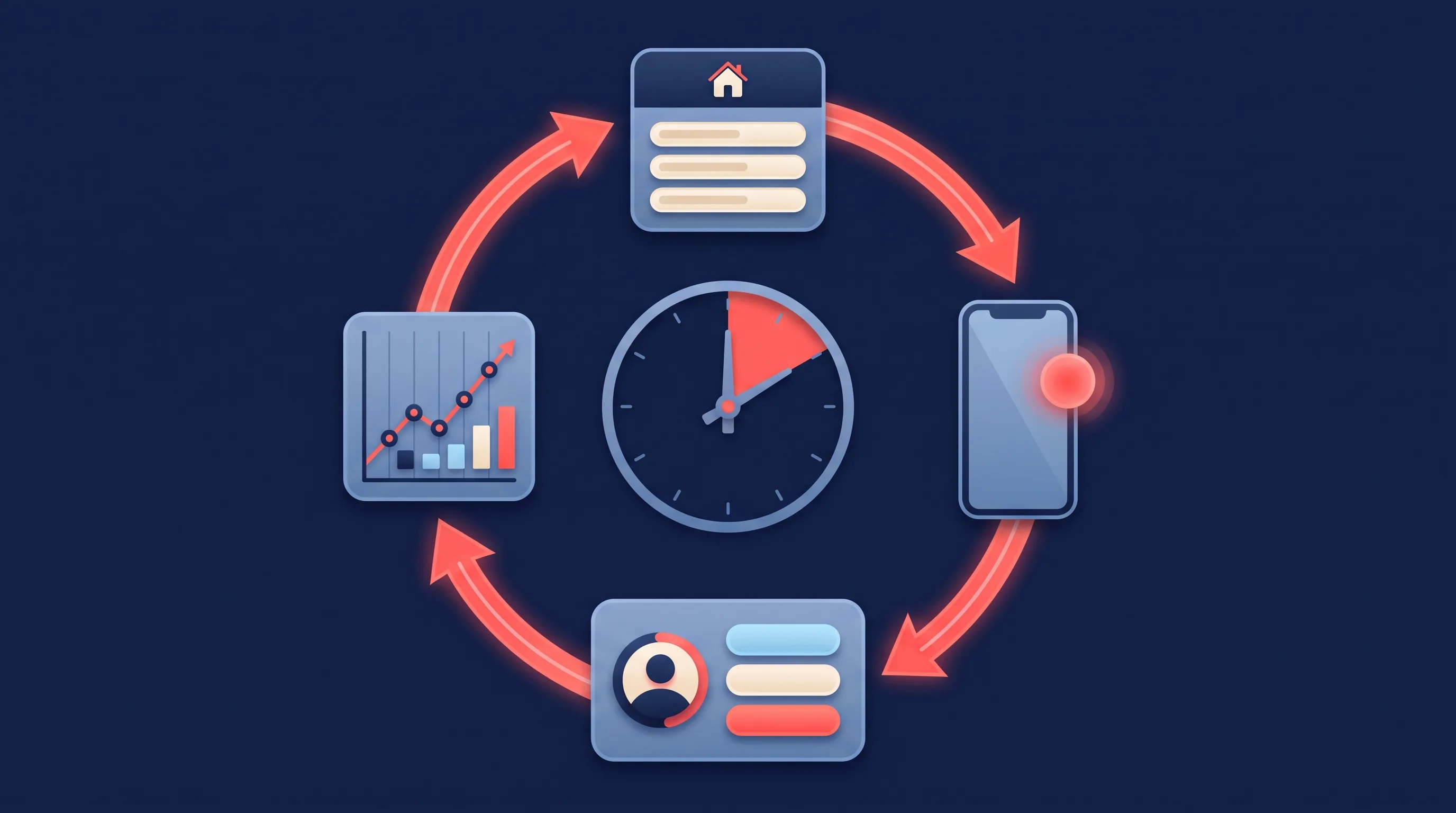
A system is what lets you respond in five minutes from an open house, a car park or a Sunday lunch. It has four parts.
1. Instant alert, with the lead’s details in it
The alert has to reach your phone, not your inbox, and it has to carry the name, number and what they asked for, so you can act from the notification itself. A dashboard you have to open is not an alert.
With LeadSync, every lead from a Facebook, Instagram, Google, LinkedIn or TikTok form triggers an SMS, email or WhatsApp alert within seconds. The alert includes a link to a lead page with one-tap Call, Text and WhatsApp buttons, so the five-minute text is two taps from the notification.
2. An automatic first reply to the lead
Your text within five minutes is the goal. Your automated reply within five seconds is the safety net. An autoresponder that says “Thanks Sam, I’ve got your request about Mitford Street and I’ll be in touch shortly” buys you the time to finish the conversation you are in. It also stops the lead from assuming nobody is there and moving on to the next agent.
Keep the automatic reply short and human. Do not pitch in it. Its only job is to confirm receipt and set an expectation.
3. A CRM record with a status
Every lead needs to land in one place with a status you can update from your phone. The lead page in a LeadSync alert has four buttons: Contacted, No answer, Booked or won and Not interested. Tap one after the call and the lead is tracked without opening anything else.
If you run a dedicated real estate CRM, LeadSync pushes the same lead into it at the same time. Follow Up Boss is the most common one we see for agents; here is a comparison of real estate CRMs if you are choosing.
4. Feedback to the ad platform
This is the part most agents skip, and it compounds. When you mark a Meta lead as Booked or won, LeadSync sends a Converted Lead event back to Meta through the Conversions API. Over a few weeks, Meta learns which kinds of people book appointments and shows your ads to more of them. The follow-up system improves the lead quality of the ads that feed it. The mechanics are in our guide to improving Facebook lead quality with CAPI.
Putting it together
The whole setup takes about ten minutes: connect your ad account, choose the forms, pick the alert channels and the CRM, turn on the automatic reply. From then on the first minute runs itself, and you spend your time on the scripts above. You can start a free trial and connect your first form today; no credit card is needed.
What do you do when a real estate lead does not respond?
Keep going, on a schedule, with something in every message. The reasons leads go quiet are mostly boring: wrong moment, phone on silent, a form they filled at midnight and forgot. Silence after two attempts is not a no.
A practical rule: work the 30-day cadence above in full. If there has been no reply by day 30, move them to the monthly nurture list rather than deleting them. If they reply “stop”, stop, and mark them Not interested so they are out of your active pipeline and out of your counts.
Watch for the fake no. “Just looking” from a buyer and “just curious” from a seller are both openings, not closings. Script 6 is the answer to both.
How do you measure real estate lead follow-up?
Four numbers, checked weekly:
| Metric | What it tells you | Target to work toward |
|---|---|---|
| Speed to first response | Whether the alert and the habit are working | Median under five minutes |
| Contact rate | Share of leads you reached by voice or reply within 48 hours | 60 percent or better for ad leads |
| Appointment rate | Share of leads that became a meeting, inspection or valuation visit | Varies by source; track it by campaign |
| Source-to-close | Which forms and campaigns produce the listings, not just the leads | Shift budget toward the forms that close |
The first number is the one to fix first. Everything else improves when it does. If you are sending leads to a CRM, the statuses in your pipeline give you the second and third numbers for free; if you are using the lead page statuses, the Contacted and Booked counts do the same job.
Your ads create the lead. Your first five minutes create the client.
The best ad creative in Melbourne cannot save a lead that waits six hours for a reply. The reverse is also true: an ordinary ad with a five-minute text, a real question and a 30-day cadence will out-convert the agency with the beautiful video and the Monday-morning callback.
Set up the alert. Save the six scripts to your phone. Run the cadence. Then let the follow-up system tell your ads who to find next.
Frequently Asked Questions
How quickly should you respond to a real estate lead?
Within five minutes. Research from MIT on 15,000 leads found a response inside five minutes is 100x more likely to reach the person and 21x more likely to qualify them than a response at 30 minutes. Average response time across businesses is around 47 hours, so a five-minute reply alone puts you ahead of most competing agents.
Should I call or text a new real estate lead first?
Text first, then call. A short text within five minutes is read almost immediately and gives the lead a low-pressure way to reply. Follow with a call a few minutes later; if they do not pick up, leave a voicemail that references the text. Email is for sending the thing they asked for and keeping a record, not for first contact.
What should I say to a real estate lead who filled out a Facebook form?
Use their name, name the thing they asked for, and ask one question. For example: “Hi Sam, it is Jess from Harbour Realty. I saw you asked for a valuation on your Elwood home. Are you thinking of selling in the next few months, or just curious what it is worth?” One question keeps the reply easy.
How many times should you follow up with a real estate lead?
Plan for 8 to 12 touches across the first 30 days, spread over text, calls and email, then one useful touch a month for as long as they are in the market. Most agents stop after two attempts, which is before most leads are ready to talk.
How do you keep in touch with real estate leads who are not ready yet?
Put them on a monthly cadence of genuinely useful touches: a market update for their suburb, a new listing that matches what they asked for, a note when a comparable home sells. One message a month that gives them something is worth more than weekly check-ins that ask for something.
How do I follow up real estate leads automatically?
Connect your lead forms to a tool that sends you an instant alert, sends the lead an automatic first reply, and creates the contact in your CRM with a status. LeadSync does this for Facebook, Instagram, Google, LinkedIn and TikTok lead forms, and its alerts carry a link to a lead page where you can call, text or WhatsApp the lead and mark it Contacted, No answer, Booked or Not interested.
What is a good real estate lead conversion rate?
It depends on the source. Online leads from ad forms commonly convert to an appointment in the low single digits to around 10 percent, and to a closed transaction at 1 to 3 percent. Response speed and follow-up consistency move those numbers more than the ad creative does, which is why agents who respond inside five minutes report closing several times the rate of agents who respond the next day.