Travel Facebook ads are Meta ad campaigns built to capture inquiries from people planning trips: travel agency clients, tour bookings, accommodation stays, and cruise inquiries. For most travel businesses the highest-performing format is the lead ad, where a prospect taps your ad and submits their contact details and trip preferences without ever leaving Facebook or Instagram.
This guide covers why lead ads fit travel so well, how to target travelers in 2026, what to ask on your form, and how to make sure inquiries turn into booked trips instead of going cold.
Why Lead Ads Fit Travel Better Than Link Ads
Most travel purchases are not impulse buys. A honeymoon, a guided tour, or a two-week international itinerary involves research, comparison, and usually a conversation with a human before money changes hands.
That buying pattern is a poor match for link ads pointing at a booking page, and a strong match for Facebook lead ads:
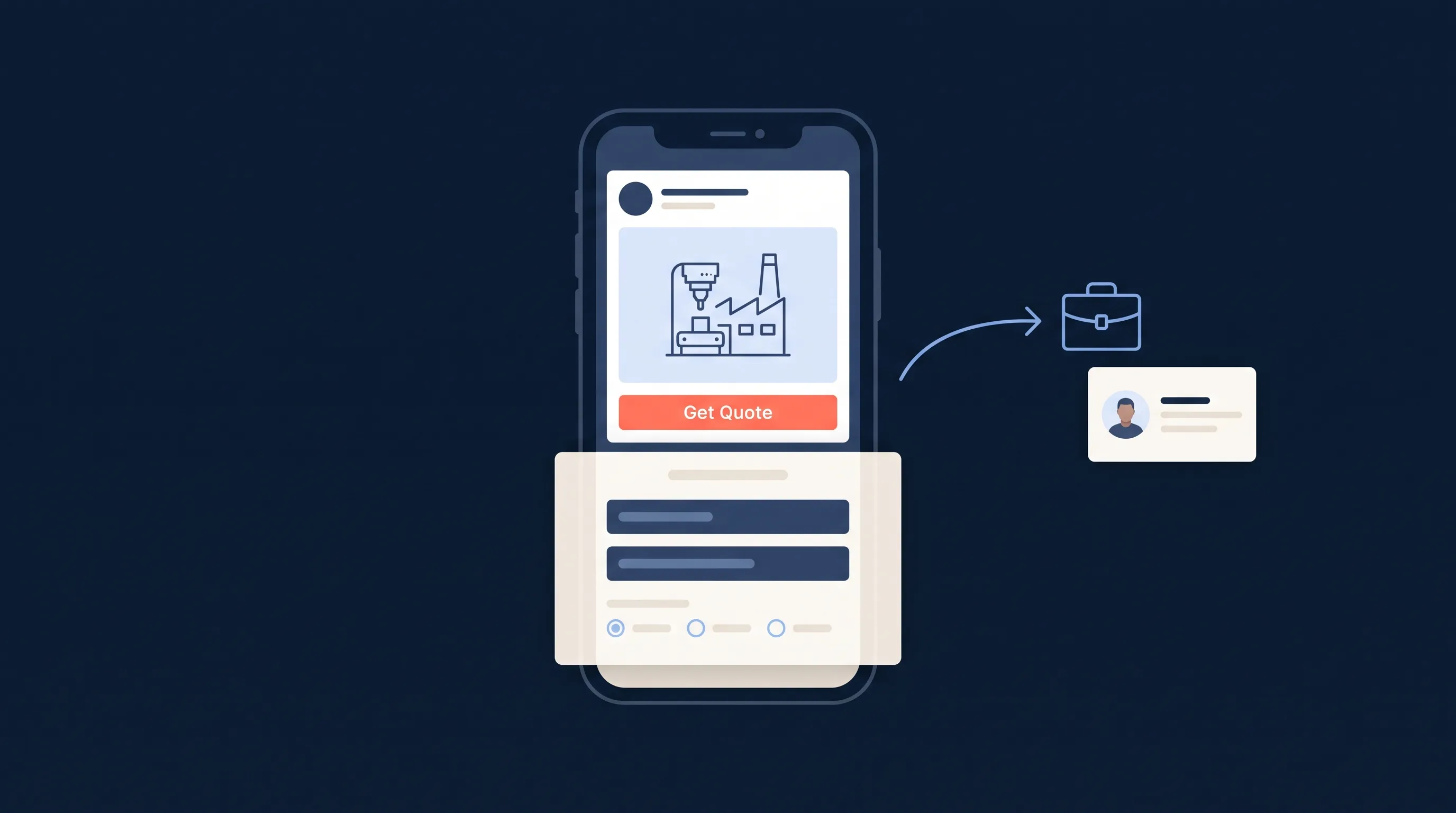
- No landing page friction. The form opens instantly in-app with name and email pre-filled from the user’s profile. On mobile, where most travel inspiration happens, that matters.
- Inquiry, not checkout. You are asking for a conversation, which is a much smaller commitment than a deposit. That suits how people actually plan trips.
- Trip details up front. Custom questions let you capture destination, dates, and budget before the first call, so your team opens with a relevant pitch instead of a discovery interrogation.
If you want a deeper comparison of in-platform forms versus your own site, see our guide to instant forms vs website forms.
Targeting Travelers in 2026
Meta pruned thousands of detailed targeting options in recent years, but travel remains one of the better-served categories. Three layers work together:
1. Travel behaviors. Meta still offers behavior segments such as frequent travelers and frequent international travelers. These are based on signals like device usage and travel-related activity.
2. Travel interests. Interest categories cover cruises, adventure travel, luxury travel, ecotourism, and most major destinations. Stack two or three rather than one broad interest.
3. Your own audiences. Website visitors, past-customer lists, video viewers, and Instagram engagers make strong Custom Audiences, and your best customers make the best Lookalike source.
Under Advantage+ Audience, all of these act as starting suggestions the algorithm can expand beyond, which in practice is what you want: feed it strong signals, then let it explore. Our Facebook ads targeting guide covers the current targeting surface in detail, and geotargeting matters doubly in travel, where you target where travelers live, not where they are going.
One seasonal note: travel demand is one of the most calendar-driven categories in advertising. If your destination has a clear booking season, our guide to lead generation for seasonal businesses covers how to ramp spend before the wave rather than during it.
Designing a Travel Lead Form That Qualifies
The default lead form (name + email, one tap) maximizes volume and minimizes quality. For travel, where each inquiry costs sales time to follow up, add friction deliberately:
- Trip type (multiple choice): package, custom itinerary, group tour, honeymoon, corporate
- Travel window (multiple choice): next 3 months, 3-6 months, 6-12 months, just researching
- Budget range (multiple choice): bands that match your products
- Phone number if your sales process is call-based
Multiple-choice answers keep completion easy while filtering out cold tire-kickers. The “just researching” answer is useful too: those leads go into a nurture sequence instead of a sales call. For more on this trade-off, see how to qualify leads with Facebook lead ads and which fields Meta can pre-fill.
Follow Up While the Trip Is Still Exciting
A traveler who inquires about a tour has usually inquired with two or three competitors in the same session. The first helpful response tends to frame the whole conversation.
Harvard Business Review research found that contacting a lead within 5 minutes makes you 100x more likely to connect than waiting 30 minutes. The problem: Meta does not notify you when a lead arrives, and leads sit in Ads Manager until someone checks.
The fix is real-time delivery:
- Instant email notifications with the full lead details, including their trip answers
- SMS alerts for high-value inquiries so a consultant can call immediately
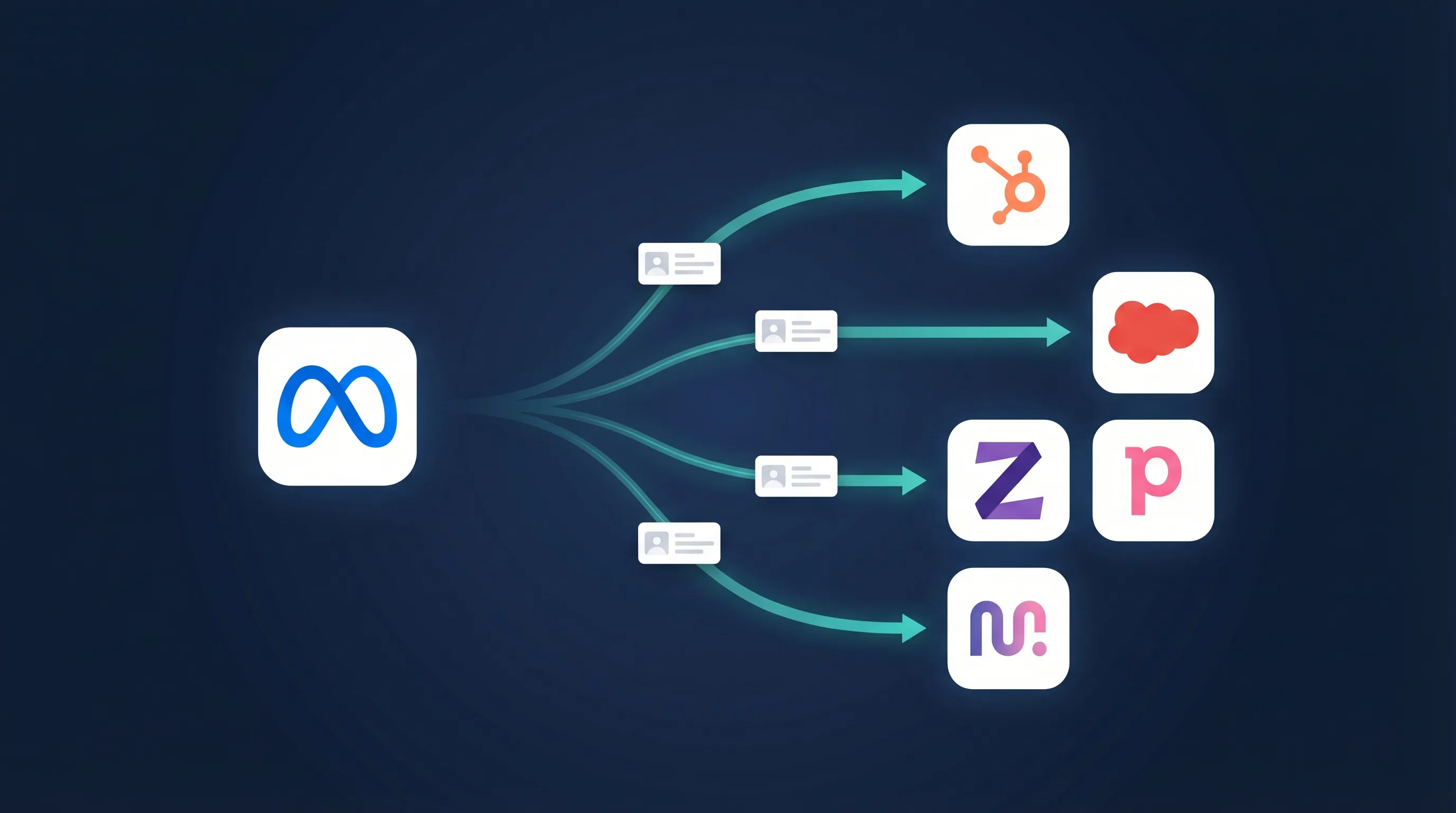
- CRM sync so the lead lands in your pipeline with the trip details attached
- Email autoresponders that confirm the inquiry and set expectations (“a travel specialist will call you within the hour”)
LeadSync handles all four from one dashboard, delivering each lead in under 60 seconds. More on why this matters in our speed to lead breakdown.
Travel Sub-Verticals: What Works Where
Travel agencies and trip planners. Lead with a specific itinerary or deal, not “we plan trips.” A carousel of three sample itineraries with prices outperforms generic brand creative.
Tour operators. Use video of the actual experience. Qualify by group size and date window. Tours with fixed departures should ask which departure the prospect is considering.
Accommodation and resorts. Lead ads suit packages and event stays (weddings, retreats, long stays) better than single-night bookings, which belong in a direct booking funnel.
Cruise sellers. Long consideration windows make nurture critical. Capture the lead early with a cabin-pricing or itinerary offer, then run an email sequence until booking season.
Measuring What Matters
Track cost per qualified inquiry and cost per booked trip, not just cost per lead. A $40 lead that books a $4,000 itinerary beats a $7 lead that never answers the phone. Our cost per lead benchmarks post covers how to think about CPL by industry, and Conversions API lets you send booking outcomes back to Meta so the algorithm optimizes for travelers who actually convert, not just form fills.
Before you scale spend, send a test lead through each form to confirm delivery to your inbox or CRM works end to end.
Frequently Asked Questions
Do Facebook lead ads work for travel businesses?
Yes. Travel is a high-consideration, inquiry-driven purchase, which is exactly the buying pattern lead ads suit best. Instead of paying for clicks to a booking engine, you capture the prospect’s contact details and trip preferences inside Facebook or Instagram, then follow up with a quote or itinerary.
How do I target travelers with Facebook ads?
Combine three layers: travel behaviors (frequent travelers, frequent international travelers), travel interests (cruises, adventure travel, luxury travel, specific destinations), and your own data (website visitors, past-customer lookalikes, and engaged Instagram followers). Under Advantage+ Audience, these act as starting signals the algorithm expands beyond.
What questions should a travel lead form ask?
Keep it to 3 to 5 fields: name and email (pre-filled by Meta), plus custom questions for trip type, approximate travel dates or month, and budget range. Each qualifying question lowers volume slightly but raises lead quality, which usually nets out positive for travel businesses selling considered trips.
How quickly should a travel business follow up a lead?
Within minutes if possible. Travelers planning a trip typically inquire with several providers at once, and the first helpful response usually frames the conversation. Real-time lead delivery to your inbox, phone, or CRM makes a 5-minute response achievable without anyone refreshing Ads Manager.
How much do travel leads from Facebook cost?
Cost per lead varies widely by sub-vertical, destination, season, and how many qualifying questions you add. Short forms for domestic packages sit at the cheaper end; long forms for luxury or international trips cost more per lead but convert better. Run your own numbers against the value of a booked trip rather than chasing a generic benchmark.
Get Travel Leads Into Your CRM in Real Time
Travel inquiries cool off fast. LeadSync delivers every Facebook, Instagram, Google, LinkedIn, and TikTok lead to your email, SMS, or CRM within 60 seconds, with autoresponders included. Try it free for 7 days, no credit card required.