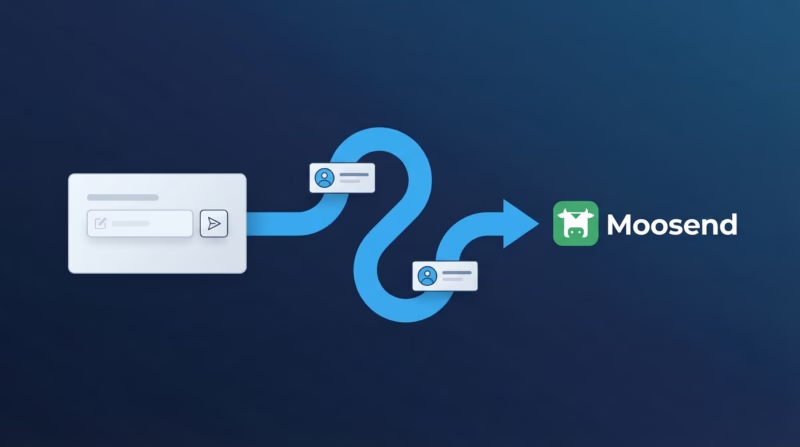
Google Ads leads sit in your ad account for hours before your team even sees them. By then, engagement drops, response rates plummet, and you’ve lost momentum. LeadSync automates this: the moment someone fills out your Google lead form extension, their data flows directly into Moosend, triggering your email automation workflows instantly. No manual exports, no delays, no lost leads.
Quick Start: Google Ads Leads to Moosend in 5 Steps
- Grab your Moosend API key from account settings
- Connect Moosend to LeadSync with one click
- Authorize your Google ad account via OAuth
- Select your Google lead form extension and map fields to Moosend
- Test with a real lead and watch it sync within 1-2 minutes
Why Sync Google Ads Leads to Moosend?
Step-by-Step: Connect Google Ads Leads to Moosend
Step 1: Get Your Moosend API Key
Log into your Moosend account and navigate to Settings > API Key. You’ll see your API key displayed in a text field. Copy this entire key—you’ll need it in the next step. If you haven’t generated an API key yet, Moosend will prompt you to create one. Keep this key private and never share it in emails or public channels.
Step 2: Log in to LeadSync and Add a New Connection
In your LeadSync dashboard, click Add New Connection (or navigate to Connections). Search for Moosend and click to select it. Paste your API key into the field labeled API Key. LeadSync will verify the key immediately. Once verified, you’re ready to move to the next step.
Step 3: Select Your Mailing List
After authentication, LeadSync pulls all your Moosend mailing lists. Choose which list you want Google Ads leads to subscribe to. If you don’t see your desired list, create it in Moosend first, then come back to LeadSync and refresh the dropdown. You can set up multiple connections to route different lead sources to different lists.
Step 4: Connect Your Google Ad Account and Select Your Lead Form Extension
Click Add Google Account and authorize LeadSync to access your Google Ads account. You’ll be taken to Google’s OAuth permission screen where you’ll confirm that LeadSync can read your lead forms and campaigns. Once authorized, return to LeadSync and select the lead form extension you want to connect. If you manage multiple Google ad accounts, LeadSync lets you choose which one to use and which specific lead form extension to sync.
Step 5: Map Your Fields
Email is required—make sure your Google lead form extension has an email field and that LeadSync maps it correctly. Map any other fields you’ve set up: first name, last name, phone, company, or custom fields you’ve added to your Moosend list. Fields that don’t have a match in Moosend are skipped; they won’t cause errors. You can reorder mappings or leave fields unmapped if they’re optional.
Step 6: Test with a Lead
Before going live, submit a test lead through your Google lead form extension. You should see it appear in your Moosend list within 1-2 minutes. Check that all fields populated correctly and that the subscriber is assigned to the right list. If something’s off, go back to the field mapping step and adjust. Once you’re confident, you’re live—every new lead will sync automatically.
Customizing Your Moosend Integration
Custom fields: Moosend lists support custom fields beyond the basics. If you’ve added custom fields to your list (like “Industry” or “Budget Range”), map your Google form fields to them during setup. LeadSync syncs any field you’ve mapped, no limits.
Automation workflows: Once leads land in Moosend, your automation workflows trigger immediately. Create welcome sequences, nurture campaigns, or drip campaigns that start the moment a lead subscribes. LeadSync gets leads in the door; Moosend handles the follow-up.
Multiple Moosend lists: If you run different lead form extensions or campaigns for different audiences, set up separate LeadSync connections for each. Route Google Ads leads to List A, Facebook leads to List B—all from a single dashboard. Each connection syncs independently and automatically.
Duplicates: Moosend’s default behavior handles duplicates based on email address. If the same email subscribes twice, Moosend updates the existing record. If you prefer to reject duplicates, configure that in Moosend’s list settings, and LeadSync will respect that rule.
Go Beyond Moosend: Multi-Channel Lead Routing
Moosend is just one destination. LeadSync integrates with dozens of platforms, so you can route the same Google Ads leads to multiple places simultaneously:
Combine Moosend with these channels to build a complete lead management engine that captures, qualifies, and nurtures leads across every touchpoint.
Frequently Asked Questions
How fast do leads sync from Google Ads to Moosend?
Leads typically sync within 1-2 minutes of submission. This means your Moosend automation workflows start shortly after capture, giving you a significant competitive advantage over manual or delayed systems.
What if a lead is missing their email address?
Email is required for Moosend subscription. If a Google lead form submission doesn’t include an email, LeadSync will flag it and not sync that lead. Make sure your Google lead form extension requires the email field to avoid lost leads.
Can I sync custom fields from my Google lead form to Moosend?
Yes. Map any custom field in your Google form to a custom field in your Moosend list. During field mapping, you’ll see all available fields from your lead form extension. Fields that don’t have a Moosend equivalent can be stored in Moosend’s custom fields if you’ve created them, or skipped entirely.
Is there a per-lead fee or monthly cap on synced leads?
No. LeadSync uses flat-rate pricing. You pay one monthly fee regardless of how many leads you sync. Sync 10 leads or 10,000 leads per month—your cost stays the same. This is why LeadSync is so much cheaper than Zapier for high-volume lead management.
Can I send the same Google Ads leads to multiple Moosend lists?
Yes. Create multiple LeadSync connections—one for each Moosend list you want to target. You can send all leads to every list, or use LeadSync’s advanced routing to send different leads to different lists based on custom criteria like lead form source or lead data.
How does LeadSync compare to Zapier for Google Ads-to-Moosend automation?
Zapier charges per task (per lead synced). At 500 leads per month, Zapier costs $750+. LeadSync’s flat rate is typically $50-150 per month, depending on your plan. Plus, LeadSync is built for lead syncing, so it’s faster, more reliable, and doesn’t require fussing with Zap configurations. No comparison.
Do I need to install anything on my website?
No. LeadSync is a cloud service. You never install code or create webhooks. Just authorize Google and Moosend, map your fields, and you’re done. Everything runs on LeadSync’s servers.
Can I try this for free before committing?
Yes. LeadSync offers a 14-day free trial with full feature access. No credit card required. Connect as many integrations as you want and sync as many leads as you need. If you decide it’s not for you, cancel anytime with no questions asked.
What happens if the Moosend API goes down or there’s an error during sync?
LeadSync automatically retries failed syncs with exponential backoff. If a lead fails to sync, you’ll receive an alert, and LeadSync will keep retrying for 24 hours. In rare cases of repeated failures, check your API key, list name, and field mappings. Most issues are resolved by refreshing the connection in LeadSync.
Related Integration Guides
Looking for a different destination for your Google Ads leads? These integration guides walk you through setup step by step:
- How to Send Google Ads Leads to Vertical Response
- How to Send Google Ads Leads to Customer.io
- How to Send Google Ads Leads to Iterable
- How to Send Google Ads Leads to SendGrid
- How to Send Google Ads Leads to Campaigner
Start Syncing Google Ads Leads to Moosend Today
Stop losing leads to delays and manual work. With LeadSync and Moosend, every Google Ads lead becomes an instant subscriber ready for your email automation. Your team moves faster. Your follow-up improves. Your conversions grow. Start your 14-day free trial today—no credit card required. See how much faster you can close leads when they arrive in Moosend the moment they fill out your lead form extension.