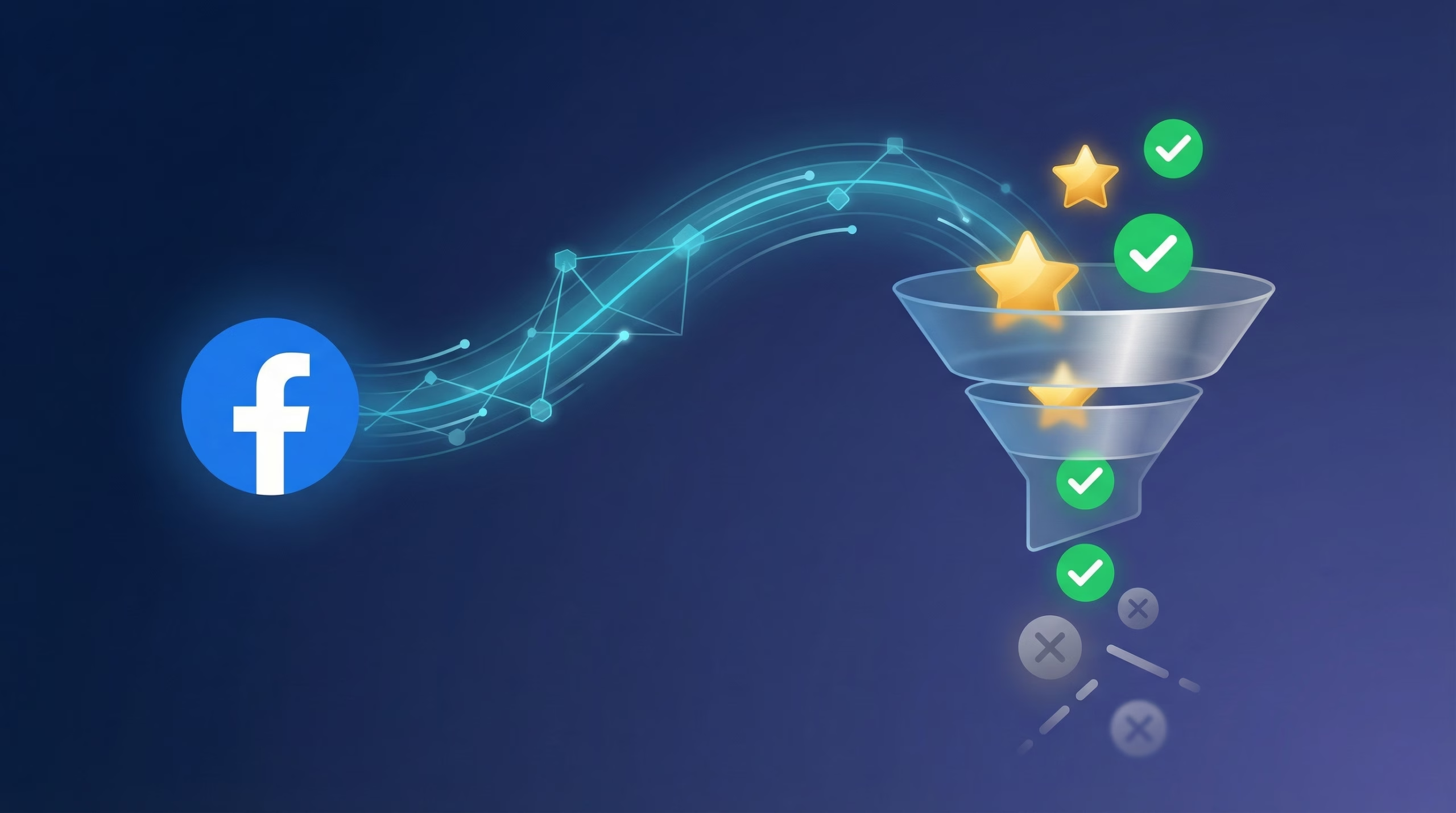
Your Facebook lead form captures hundreds of contacts every month, but they’re sitting in isolation. Without connecting them to your email platform, you’re missing critical opportunities to nurture, segment, and convert those leads into customers. Customer.io is built for behavior-triggered messaging—sending the right message at the right time based on customer actions and attributes. When you sync Facebook leads directly into Customer.io through LeadSync, every new prospect becomes an identified customer ready for automated campaigns, behavioral segmentation, and personalized engagement.
Quick Start: Facebook Leads to Customer.io in 5 Steps
- Get your Customer.io Site ID and API Key from Integrations settings
- Connect your Facebook lead form to LeadSync
- Add a Customer.io destination and paste your credentials
- Map your Facebook form fields to Customer.io attributes
- Test with a lead and watch it sync in seconds
Why Sync Facebook Leads to Customer.io?
Customer.io is one of the most powerful behavior-based email platforms on the market. When paired with Facebook lead ads and LeadSync, you unlock capabilities that generic email platforms can’t match:
- Every lead becomes an identified customer with rich attributes. Your Facebook form data—email, phone, company, budget, timeline—flows directly into Customer.io as searchable, segmentable attributes. No more CSV uploads or manual CRM entries.
- Custom attributes enable advanced segmentation and targeting. Map custom fields from your Facebook form (like “Product Interest” or “Budget Range”) to Customer.io attributes, then build segments that trigger automated workflows based on those values.
- Leads sync in seconds, not hours. Your new Facebook leads appear in Customer.io instantly, ready to enter triggered campaigns, welcome series, or nurture funnels within moments of form submission.
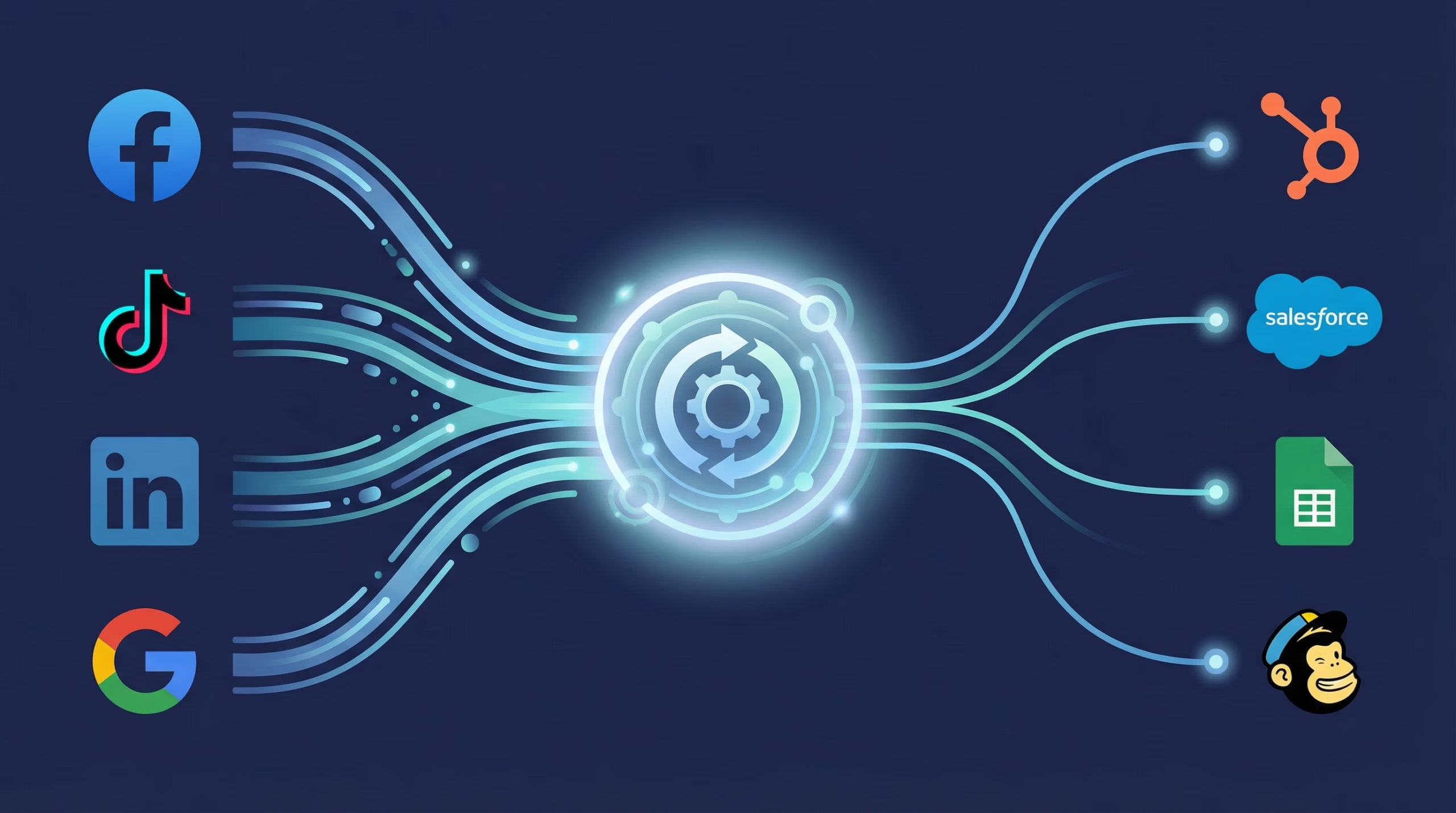
- Integrations span Facebook, Google, LinkedIn, and TikTok. LeadSync connects all your lead ad platforms to Customer.io, creating a unified lead capture and messaging hub.
- Start free, no credit card required. LeadSync offers a 14-day free trial with no payment method upfront. Test the entire integration before committing.
Step-by-Step: Connect Facebook Leads to Customer.io
Step 1: Get Your Customer.io API Credentials
Log into your Customer.io account and navigate to Integrations > API Credentials (or Settings > API depending on your account layout). You’ll see two values:
- Site ID: A numeric identifier unique to your Customer.io workspace
- API Key: Your secret authentication token (treat this like a password—never share it publicly)
Copy both values and keep them handy. You’ll paste them into LeadSync in the next few steps.
Step 2: Log in to LeadSync and Add a New Connection
Go to leadsync.me/account/signin and log in with your LeadSync account. If you don’t have one yet, start your free 14-day trial here.
From your LeadSync dashboard, click + Add Connection or + New Destination (the exact label depends on your interface version). Select Customer.io from the list of available integrations.
Step 3: Enter Your Site ID, API Key, and Custom Attribute
LeadSync will prompt you for:
- Site ID: Paste the numeric ID from Customer.io
- API Key: Paste your secret API key
- Custom Attribute (optional): This field lets you add a static attribute to every lead synced. For example, you might set “Lead Source” to “Facebook Ads” so you can segment your Customer.io customers by their origin later.
Click Save or Connect to authenticate. LeadSync will verify your credentials and confirm the connection.
Step 4: Set Up Your Facebook Lead Form Connection
Next, you need to connect your Facebook lead form (or lead ad campaign) to LeadSync. From your LeadSync dashboard:
- Click + Add Source or Connect Lead Form
- Select Facebook Lead Ads from the platform list
- Authorize LeadSync to access your Facebook business account (LeadSync will request permissions to read your lead forms)
- Choose the specific Facebook lead form or campaign you want to sync
LeadSync will now pull in all leads submitted to that form—both historical and new submissions going forward.
Step 5: Map Your Fields
This is where the magic happens. LeadSync shows you all the fields in your Facebook lead form (like “Full Name,” “Email,” “Phone,” “Company,” etc.) and asks you to map them to Customer.io attribute names.
For example:
- Facebook field “Full Name” → Customer.io attribute “name”
- Facebook field “Email” → Customer.io attribute “email”
- Facebook field “Phone” → Customer.io attribute “phone”
- Facebook field “Company Size” → Customer.io attribute “company_size” (custom)
- Facebook field “Budget” → Customer.io attribute “budget_range” (custom)
Email is typically required for Customer.io; other fields are optional but recommended for richer segmentation. LeadSync will often suggest sensible defaults, but you can customize the mapping to match your Customer.io schema.
Step 6: Test with a Lead
Before you leave the setup screen, use the Test button or submit a test lead through your Facebook form. Within 5-10 seconds, the lead should appear in Customer.io under People or Customers. You should see all mapped fields populated with the test data.
If the test is successful, you’re done. Your integration is live. All future Facebook leads will automatically sync to Customer.io.
Customizing Your Customer.io Integration
Once your Facebook-to-Customer.io pipeline is running, you can enhance it with custom attributes and advanced workflows.
Custom Attributes for Deeper Segmentation
Beyond the standard fields (name, email, phone), you can create custom attributes in Customer.io to segment your audience. For example:
- Lead Score: Map a hidden field or calculated value from your Facebook form to prioritize hot leads
- Product Interest: If your form asks “Which product are you interested in?”, map that to a customer attribute and use it to trigger product-specific nurture campaigns
- Timeline: Map “When are you ready to buy?” to segment early-stage vs. ready-to-buy leads
- Company Industry: Build audience segments by industry for targeted messaging
Once a custom attribute is mapped, you can build segments in Customer.io based on those values and trigger workflows automatically.
Behavior-Based Messaging Workflows
Customer.io’s strength is behavior-triggered campaigns. Once your Facebook leads are synced, you can set up workflows like:
- Welcome Series: New Facebook leads automatically enter a 5-email onboarding sequence
- Segment-Specific Campaigns: Users with “Budget: Enterprise” receive different messaging than “Budget: Startup”
- Abandoned Funnel Recovery: If a lead visits your site but doesn’t convert, trigger a re-engagement campaign
- Win-Back Campaigns: Leads that never reply to your welcome series receive a separate, more aggressive campaign
The combination of rich lead data (from Facebook) and Customer.io’s behavioral engine (triggered messaging) creates a powerful nurture machine.
Go Beyond Customer.io: Multi-Channel Lead Routing
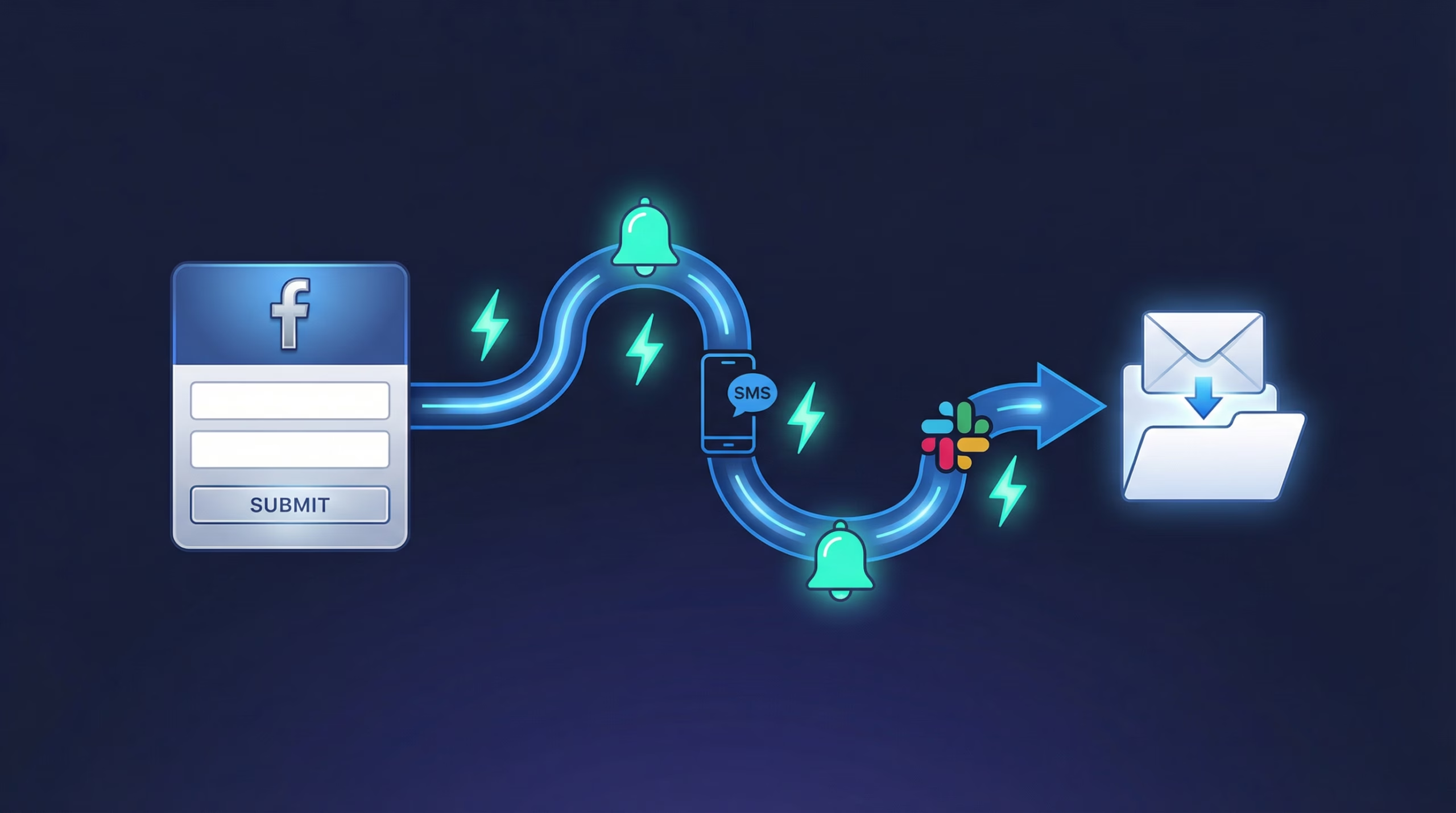
Customer.io is excellent for email, but your Facebook leads might need to reach multiple systems simultaneously. LeadSync supports routing the same lead to multiple destinations:
- Email via Customer.io: Nurture with automated campaigns
- Slack notifications: Alert your sales team instantly when a high-value lead arrives
- Google Sheets: Create a simple lead log for ad hoc analysis or manual follow-up
- SMS messages: Send immediate text reminders to leads with a phone number
Check out our guides for each channel:
- Email Notifications: How to Route Facebook Leads via Email
- Slack Notifications: Instant Facebook Lead Alerts
- Google Sheets: Organize Facebook Leads in a Spreadsheet
- SMS Notifications: Text-Based Lead Alerts
Frequently Asked Questions
How long does it take for a Facebook lead to appear in Customer.io?
Typically 5-30 seconds. LeadSync checks for new Facebook leads every few minutes and pushes them to Customer.io immediately. In rare cases (network delays, API throttling), it may take up to a minute.
Can I map the same Facebook field to multiple Customer.io attributes?
No, each Facebook field maps to one Customer.io attribute. However, if you need the same data in multiple places, you can use Customer.io’s attribute aliasing or automation rules to duplicate the value server-side.
What happens if a lead submits the form twice?
LeadSync treats each form submission as a separate event. Customer.io will update the existing customer record with new data (if the email already exists) or create a duplicate record (if the email doesn’t match). Most teams deduplicate in Customer.io using email as the unique identifier.
Can I pause syncing without disconnecting?
Yes. In LeadSync, you can disable a connection or destination without deleting it. The integration will stay configured but inactive, and you can re-enable it anytime.
Does LeadSync charge per lead?
No. LeadSync charges a flat monthly fee based on your plan. You can sync 100 leads or 10,000 leads per month—the price doesn’t change. Customer.io may have its own per-contact pricing depending on your plan.
What if I need to resync historical leads?
LeadSync can pull historical leads from your Facebook form (usually the last 90 days, depending on Facebook’s API limits). Contact LeadSync support if you need to backfill older data.
Can I use Customer.io tags instead of custom attributes?
Yes. LeadSync supports mapping to both Customer.io attributes and tags. Tags are useful for static categorization (like “VIP Lead” or “Trial Signup”), while attributes are better for variable data (like budget ranges or timelines).
What if my Customer.io API key expires?
Syncing will fail and you’ll see an error in LeadSync. Simply re-enter your updated API key in the destination settings, and syncing will resume.
Can I route leads to multiple Customer.io workspaces?
No, but you can set up multiple LeadSync connections (one per workspace) and route leads to each independently. Each connection uses its own API credentials.
Related Integration Guides
Looking for a different destination for your Facebook leads? These integration guides walk you through setup step by step:
- How to Send Facebook Leads to Moosend
- How to Send Facebook Leads to SendGrid
- How to Send Facebook Leads to Vertical Response
- How to Send Facebook Leads to Campaign Monitor
- How to Send Facebook Leads to Iterable
Start Syncing Facebook Leads to Customer.io Today
Your Facebook leads deserve to be in a system built for engagement, not just storage. Customer.io, paired with LeadSync, creates a behavior-driven funnel that nurtures leads, segments audiences, and converts visitors into customers.
Ready to get started? Choose your LeadSync plan today. You’ll have your Facebook-to-Customer.io pipeline running in less than 10 minutes, and your first leads syncing within seconds.